The Transformation That Tore Up Concrete in Vienna: Museumsquartier Goes Green
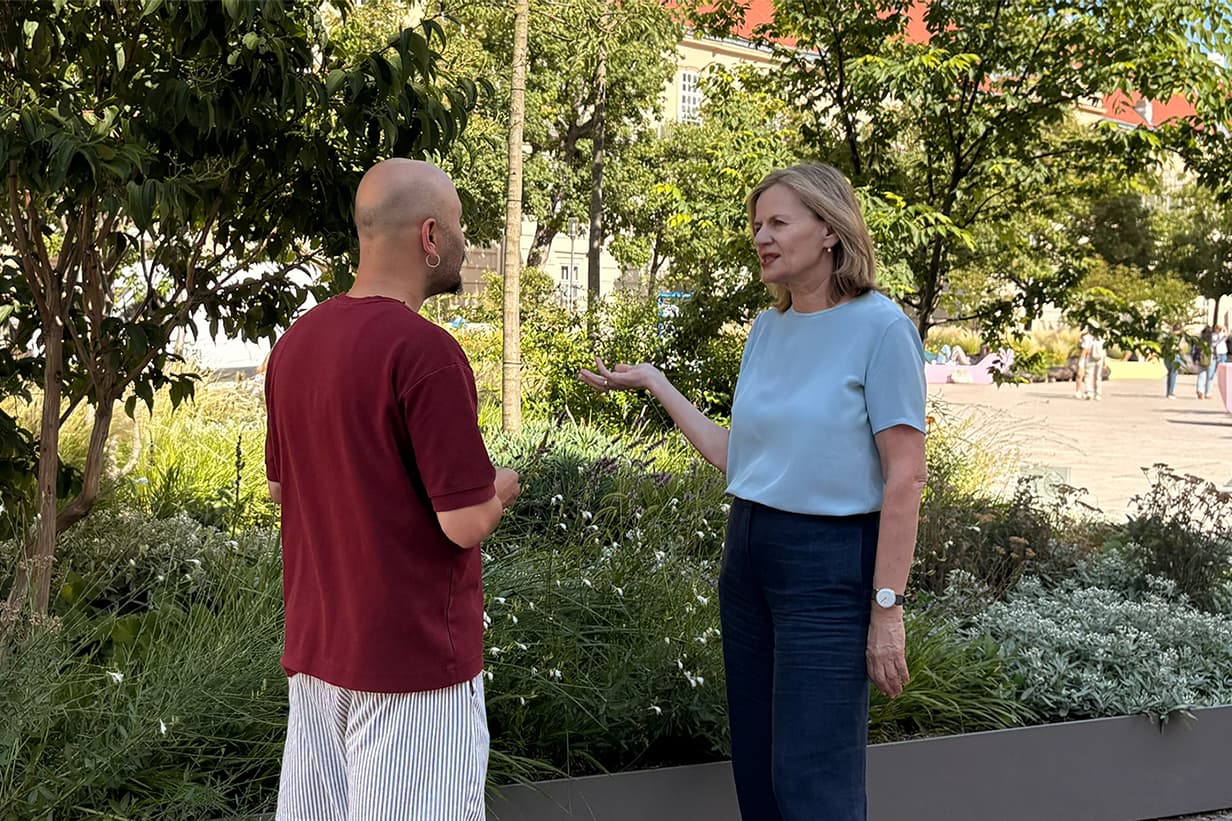
We met on-site with Museumsquartier Director Bettina Leidl to discuss the MQ Goes Green project, green transformation data, and visitor experiences.
This story was originally published in Turkish. Read in Turkish
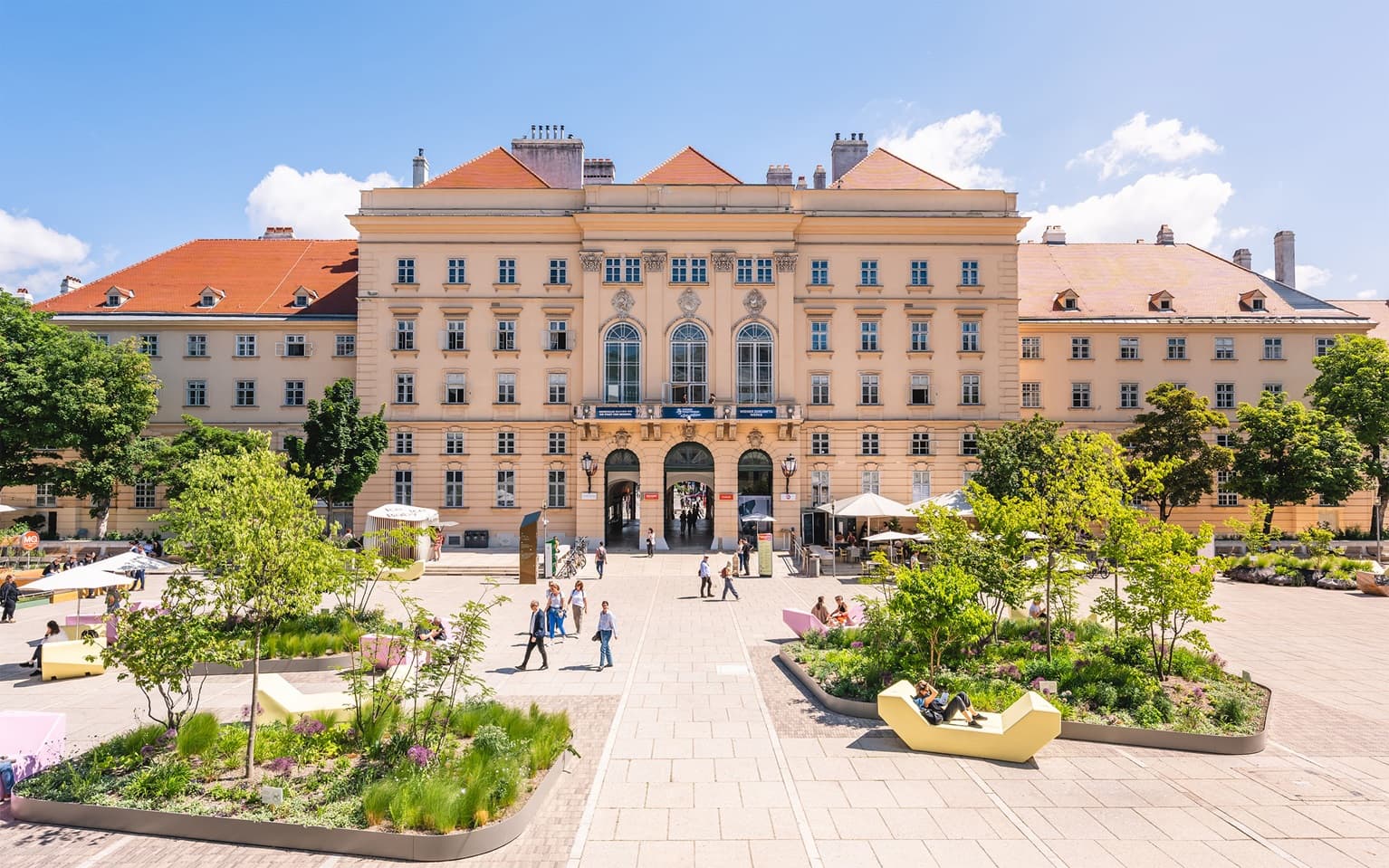
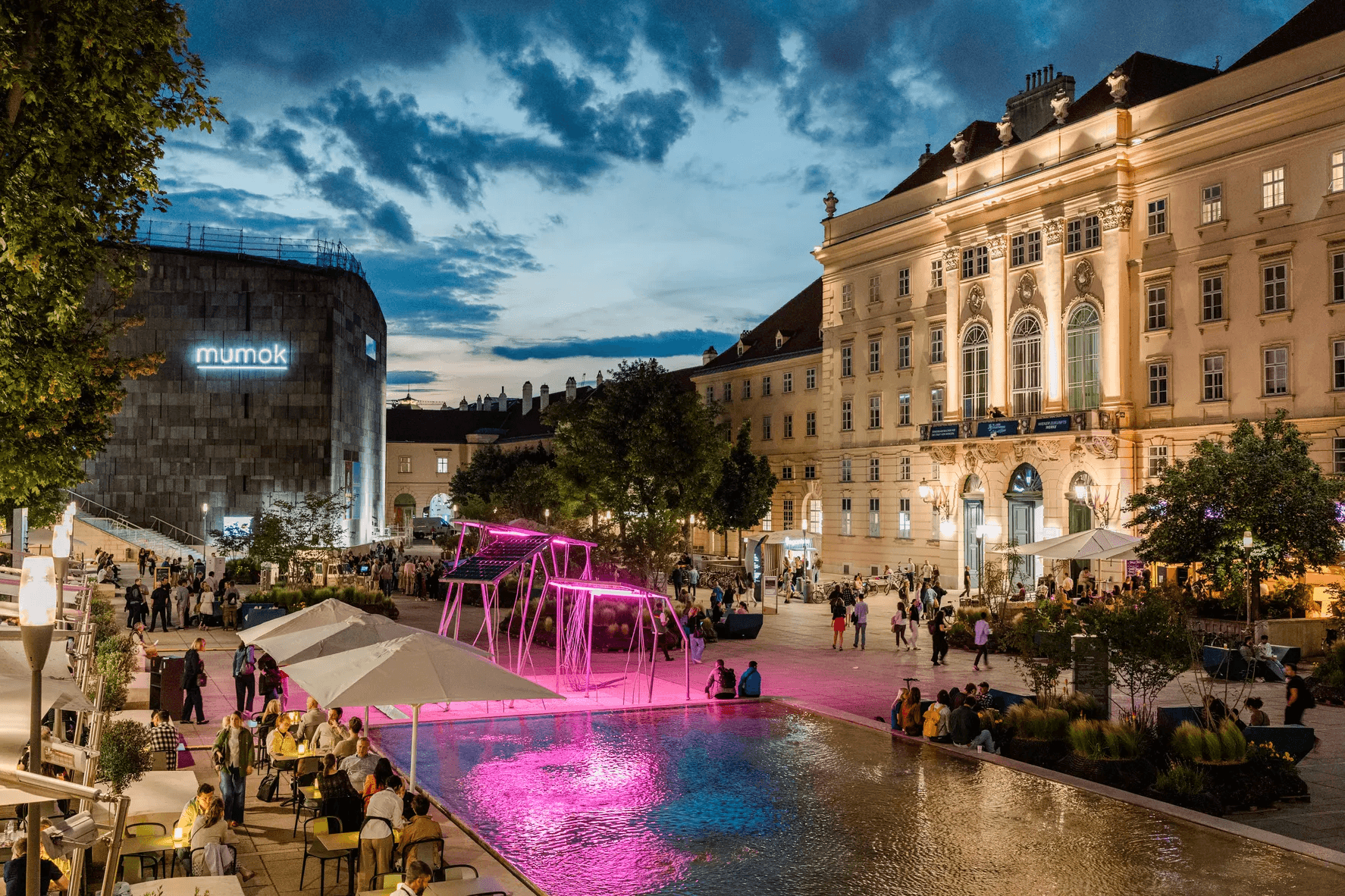
The Museumsquartier (MQ) in Vienna, one of the largest cultural and arts complexes in Europe, does more than host art; it is also the stage for an exciting revolution in urban sustainability and ecological design. Welcoming 5 million visitors a year, this vast 114,000-square-meter site is being transformed into a brand-new breathing space in the heart of the city through its “MQ goes Green” strategy, which aims to make it climate-neutral by 2030.
The MQ courtyards, a must-see for anyone who visits Vienna and for many years little more than stone courtyards with hard paving, are undergoing an evolution today that is as surprising as it is inspiring. Those spaces, once entirely dominated by stone and concrete, where contact between water, soil and the surface had been cut off, are now being redesigned with a vision that places climate-resilient planting and blue-green infrastructure at the center, instead of lifeless hardscape solutions such as crushed stone or slag.
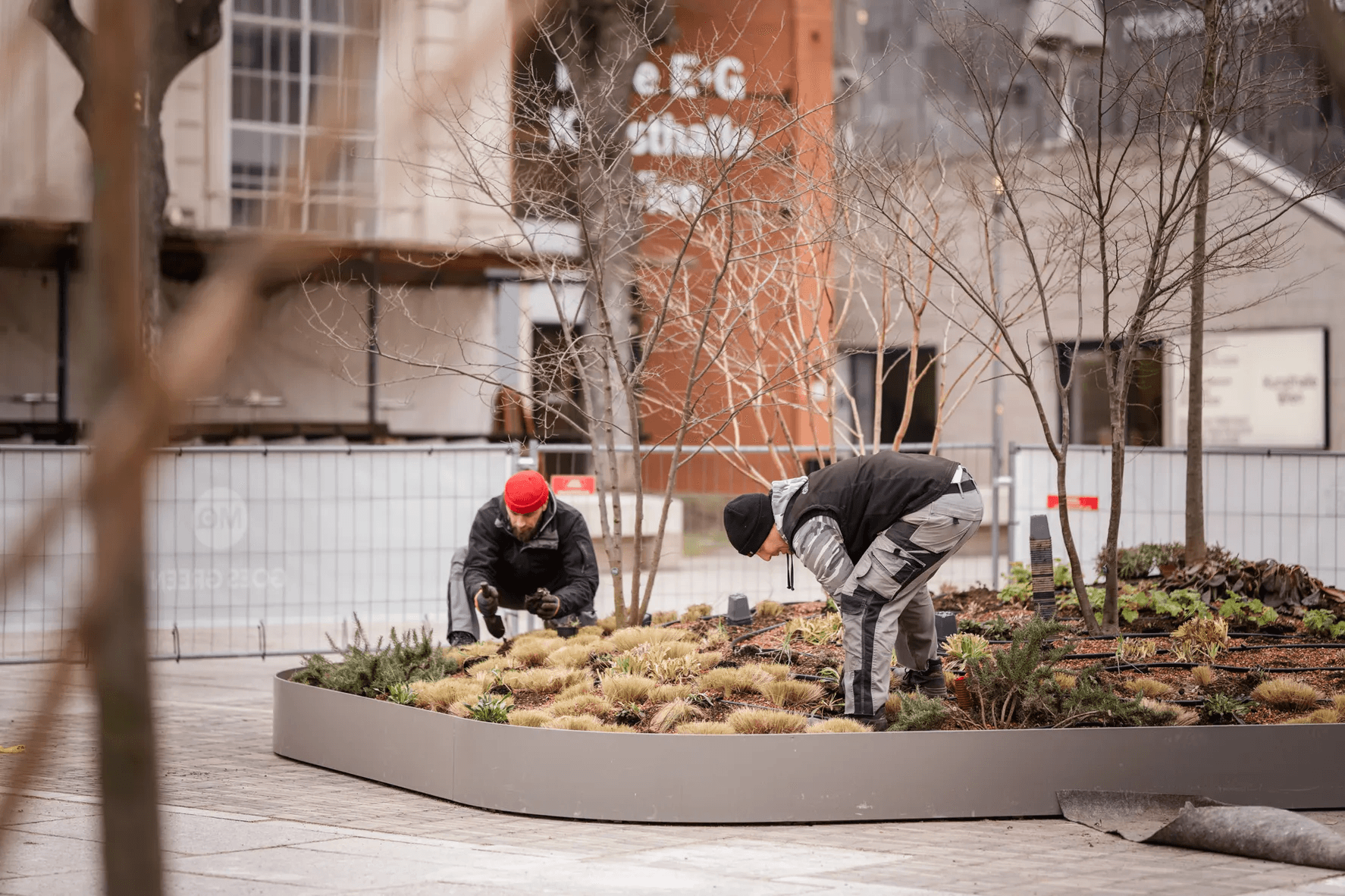
Museumsquartier’s Green Transformation in Numbers: Looking at the 2025 sustainability reports, we can clearly see how serious the change in the site’s physical and ecological infrastructure is. The mobile greening works called “MQ TreePods,” planned by the landscape architecture office DnD in 2023, moved into the permanent planting phase in 2025. The massive concrete slabs in the main courtyard were carefully removed, and permeability was increased with clinker paving.
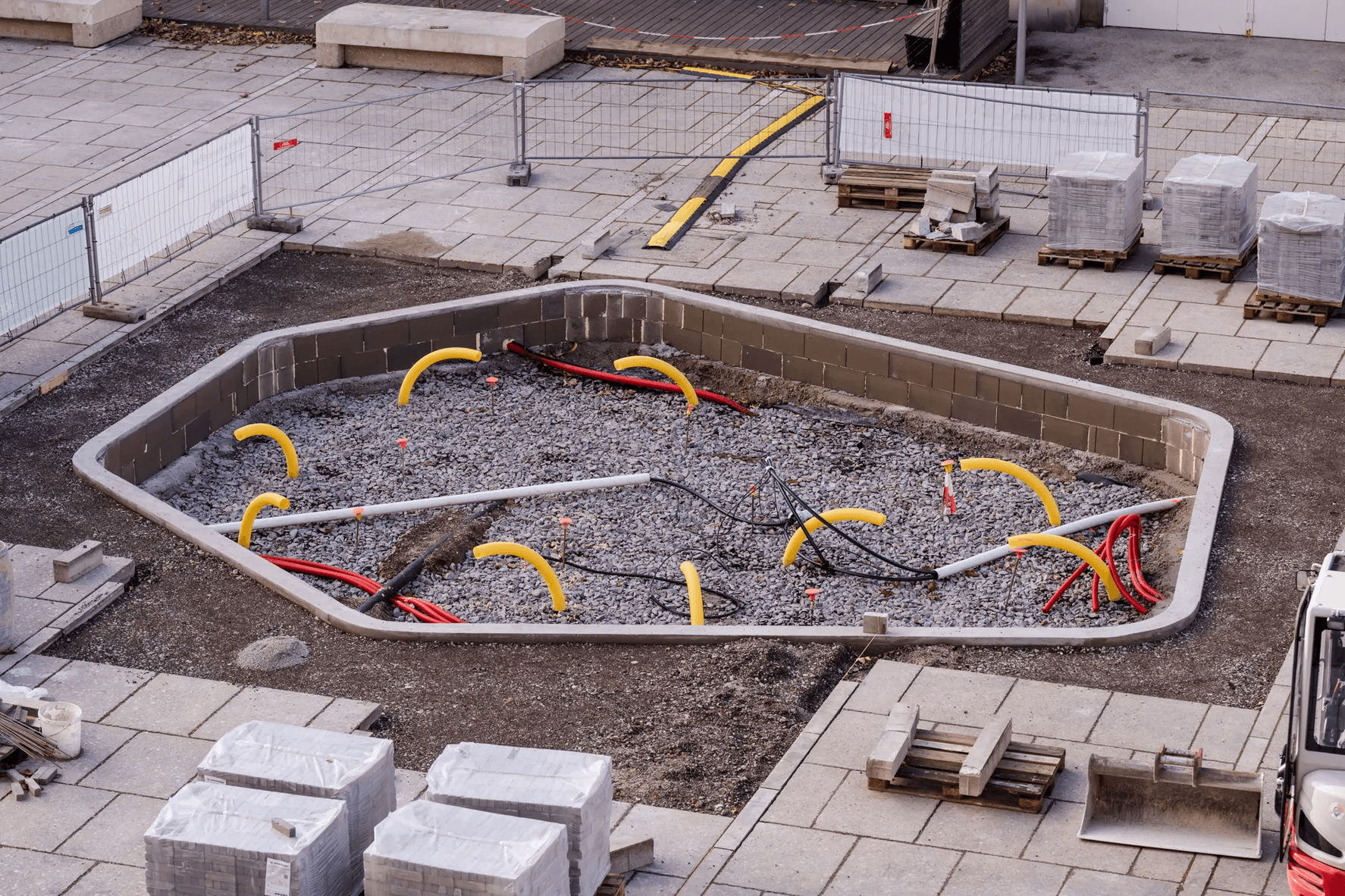
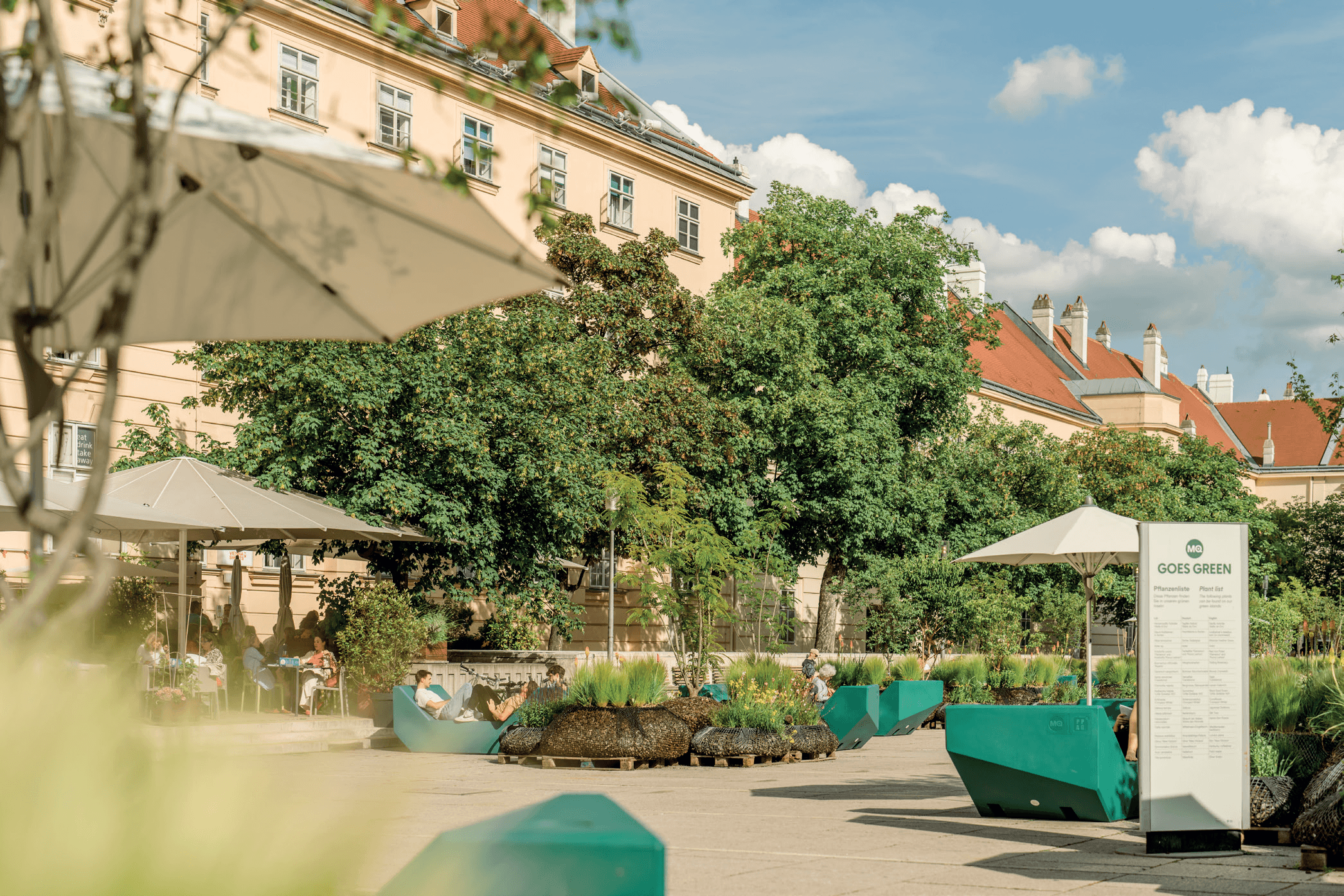
Currently, in addition to 151 existing trees, the site has 40 mobile trees and more than 2,400 perennials and reeds. What is more, this area, home to 240,000 bees, does not merely offer visual aesthetics; it is becoming a major urban biodiversity hotspot. With the modified “sponge city” system implemented, the existing clay soil structure has been optimized to retain rainwater and support the long-term development of tree roots. The microclimate simulations are quite striking: by 2035, on a hot summer day at 14:00, the perceived temperature (PET) in the shade of mature trees is projected to drop by up to 15.5°C.
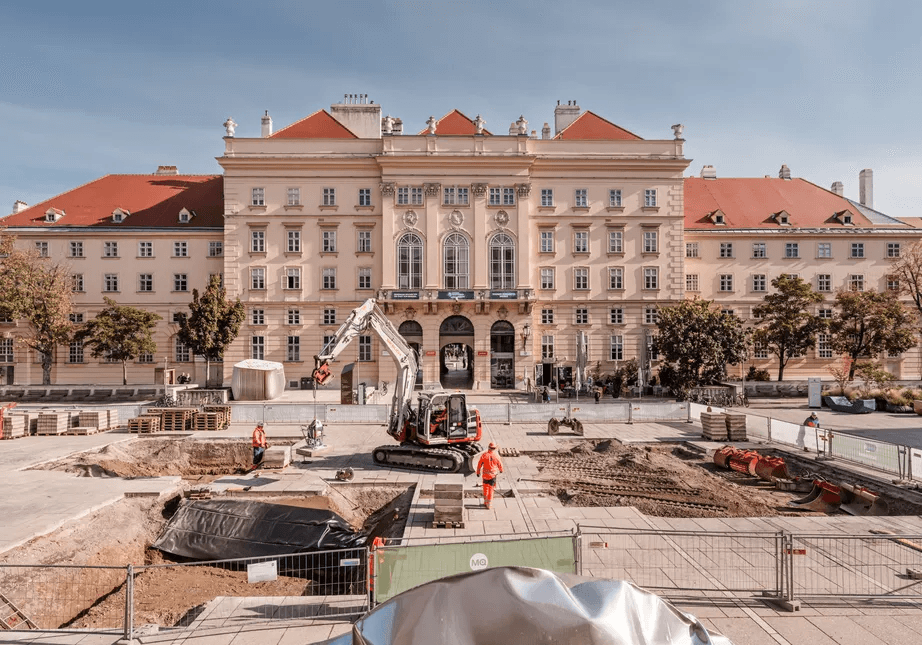
As part of energy efficiency measures, the vast glass roof of the Leopold Museum is being renewed, while thermal improvements to the winter garden of the ZOOM Children’s Museum have reduced heat loss by 50%. Certified with the Austrian Ecolabel, the MQ is also fully integrated into the circular economy through wastewater separation and deposit-return systems.
So how did this ensemble of buildings, constructed with the architectural mindset of the ’90s, go about making such radical ecological decisions? We went to the Museumsquartier to observe the change in Vienna on site and to hear the philosophy behind it firsthand. We held an inspiring interview for peyzajMAG readers with MQ Director Bettina Leidl.
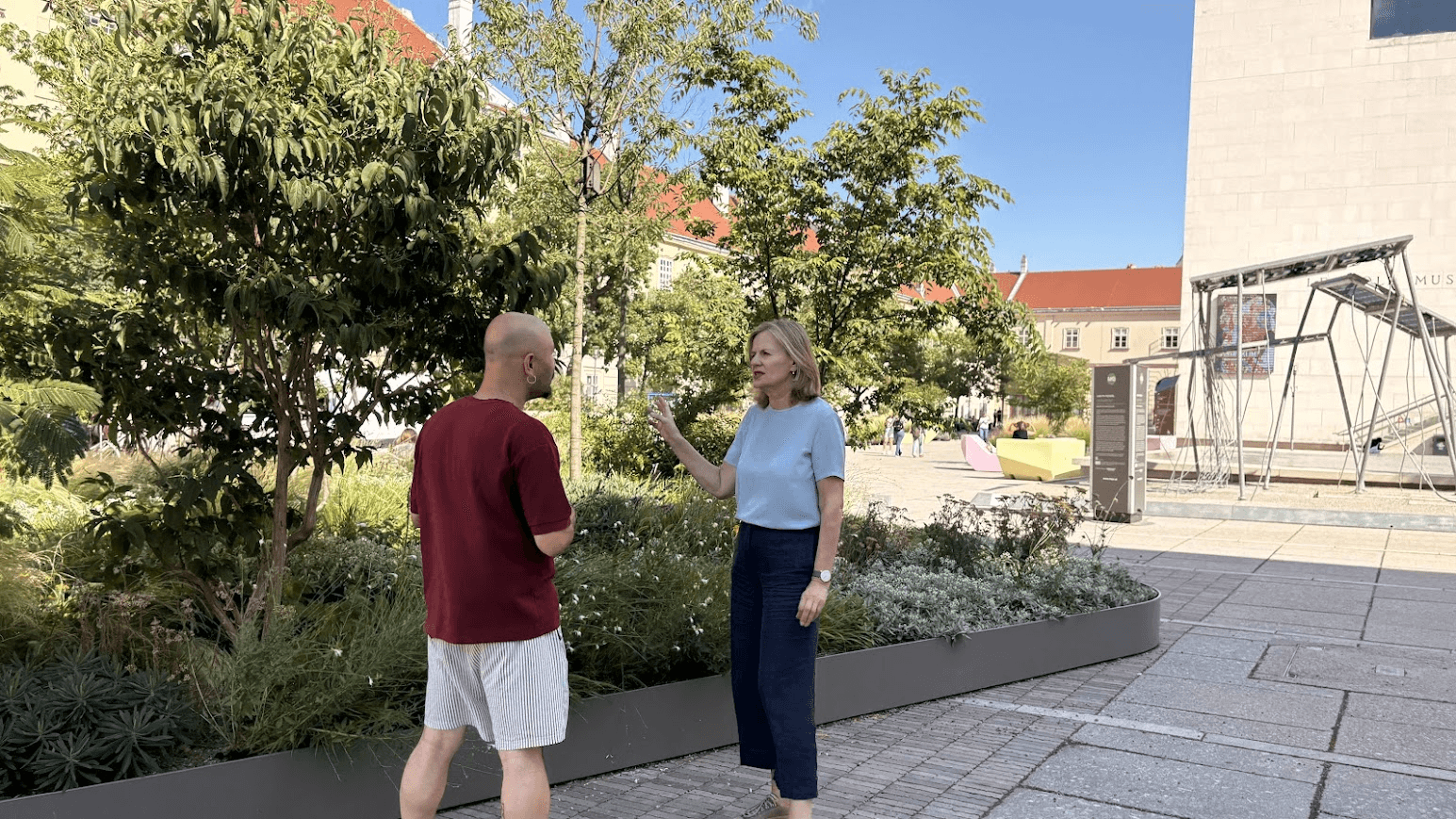
We are at the Museumsquartier in Vienna to see this remarkable transformation with my own eyes. With me is MQ Director Bettina Leidl. Bettina, first of all, could you tell us a little about this site and what exactly the “MuseumsQuartier Goes Green” project aims to achieve?
Thank you for your visit; it is a great pleasure for us to host you at the Museumsquartier. As you know, this is the largest arts and culture complex in Europe. With its museums, theaters, boutique art venues, restaurants and bookshops, it is like a small city right in the heart of Vienna. The reason you are here today is the site’s process of transformation into a sustainable, climate-neutral hub. We are advancing our “MQ Goes Green” motto along several different lines. The first of these is, without doubt, our transition from fossil fuels to green energy. Museums are buildings that consume enormous amounts of energy, so this step is vital for us. Another dimension of the work is the transformation of our huge courtyards. The Museumsquartier is actually a ’90s project. As you can appreciate, although we were aware of the climate crisis at the time, the issue was not approached with the sensitivity it is today. So, to achieve a more sustainable structure, we started by greening those huge courtyards.
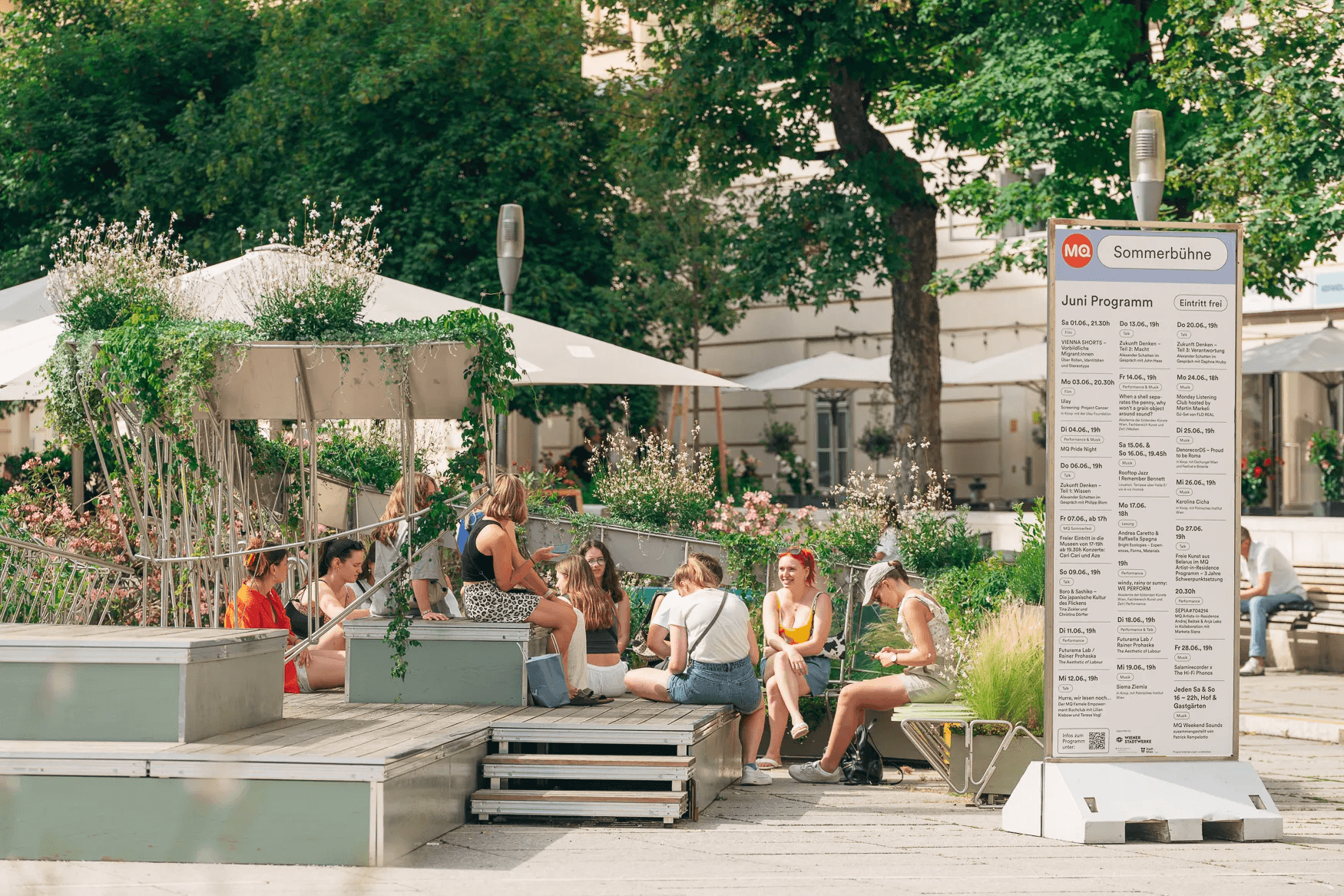
Years ago, when I lived in Vienna, this was one of my favorite places to have a drink with friends, spend time, or sometimes just be lazy. But back then there was nothing around but concrete and hard surfaces. When I first saw this greening initiative online, I was genuinely very surprised. I suppose we will see this place much greener in the future, am I right?
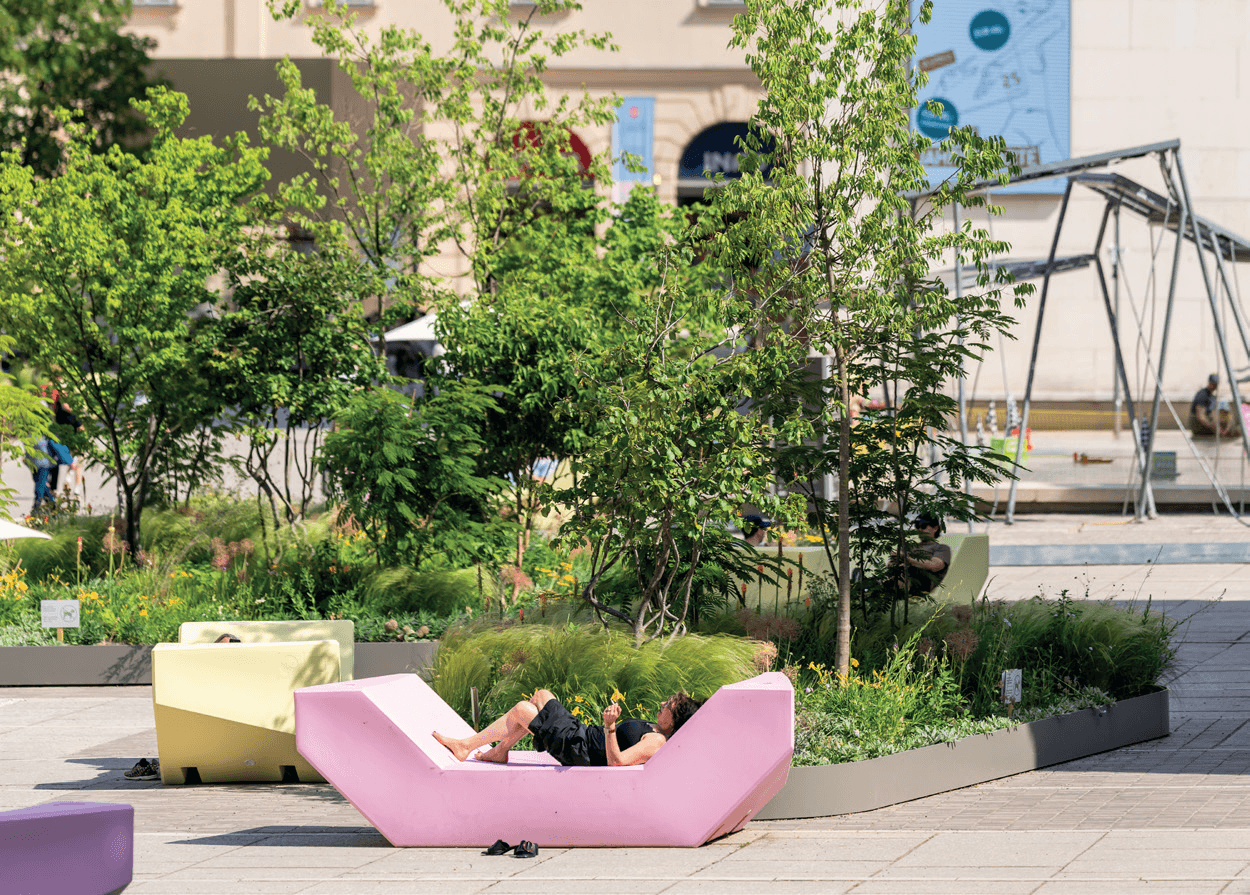
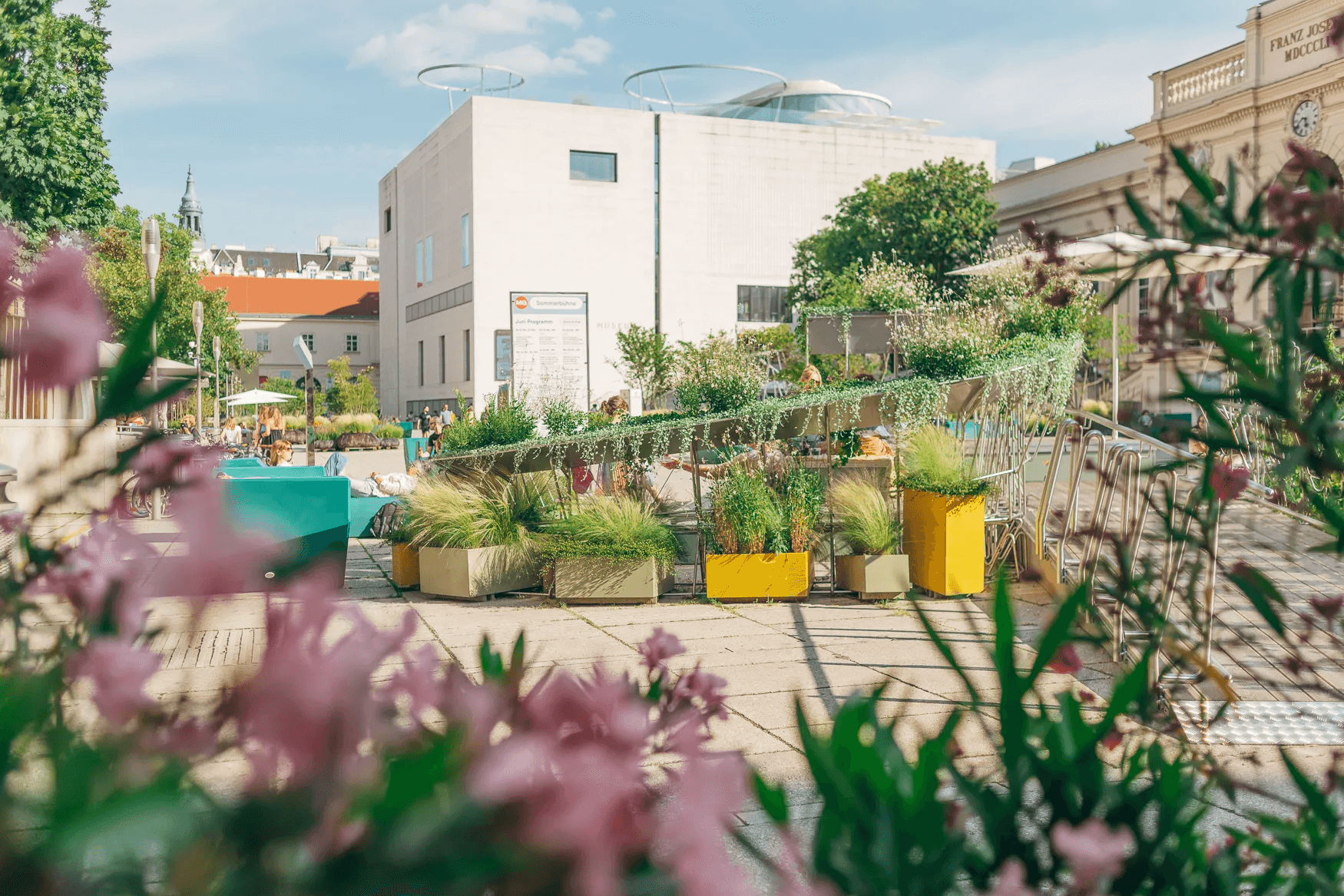
You are absolutely right. Three years ago, we set out with landscape architect Anna Detzelhofer. At the start, she designed a concept consisting of mobile trees, the famous “MQ TreePods,” as we call them. This gave us the chance to test on site what would fit where and exactly where we could place the plants. We must not forget that this is an extremely multifunctional space that welcomes around five million visitors a year. We don’t only host museums; we also organize huge festivals, big concerts and performances. For three years, we explored where the plants would establish the most fitting relationship with the space. Finally, last autumn, we broke up the ground, moved to permanent planting and created fairly large “plant islands.” We will also move the mobile planters you see over there to their permanent locations by 2027. In addition, this autumn we are starting to plant trees in our smaller courtyards as well. So we are talking about a dynamic process that will continue uninterrupted for the next five years.
What was your greatest motivation when you set out on the “Goes Green” project?
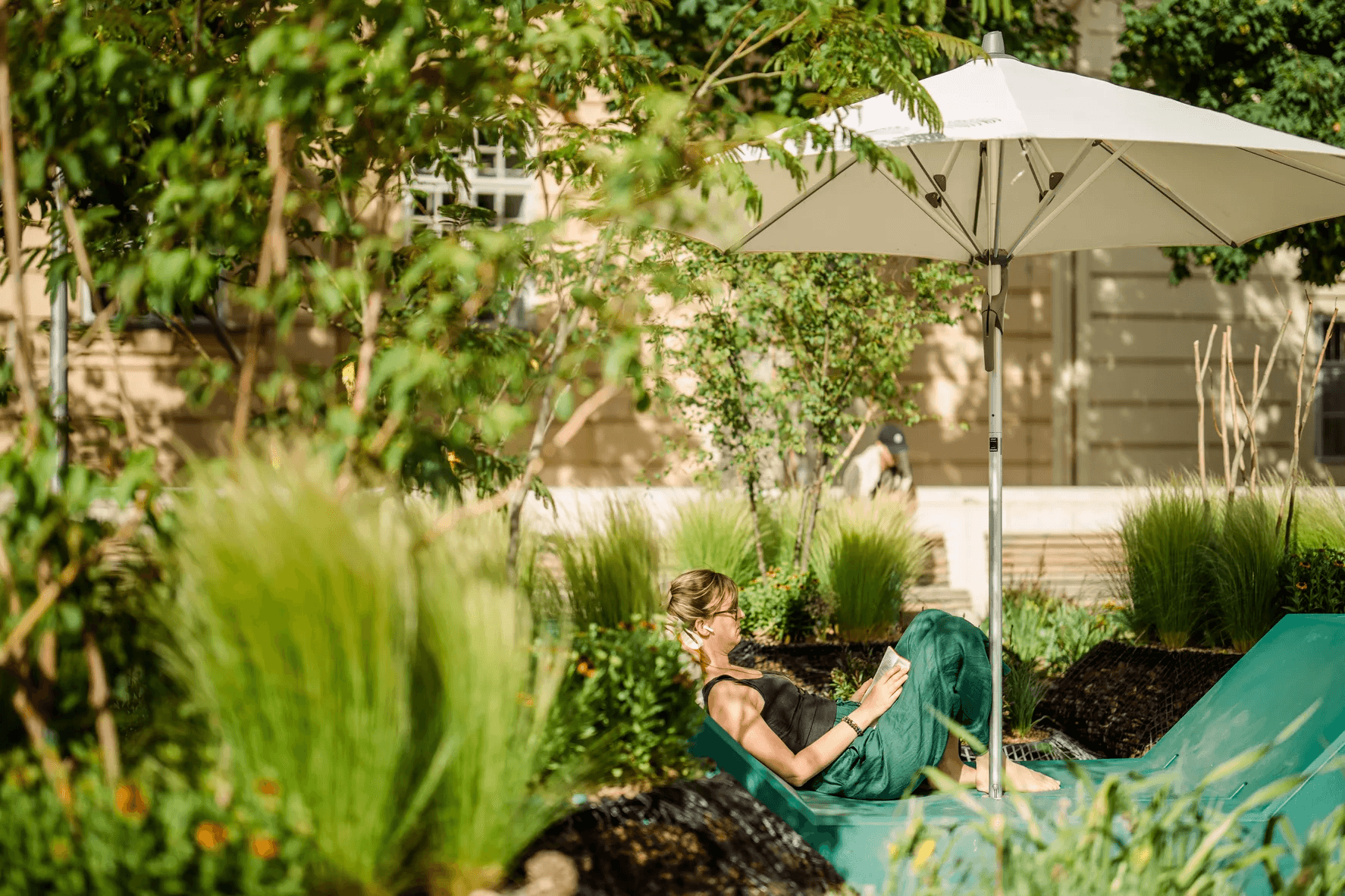
If you want to create a sustainable Museumsquartier, you have to tackle it on many different layers simultaneously. Greening is the first layer that visitors directly see and feel. For us, it is also a tool for raising awareness among our guests and conveying to them directly the ecological transformation we are going through. At the same time, we are carrying out joint studies with universities. We know that once we complete the greening process, we will be able to cool the courtyards by up to 7 degrees in the summer months. Just last week, the temperature in Vienna reached 40 degrees; it was truly incredibly hot. Just imagine what a huge difference in comfort a 7-degree drop in perceived temperature, thanks to plants alone, would make.
That’s truly wonderful. Does the project also have tangible benefits in terms of water management and biodiversity?
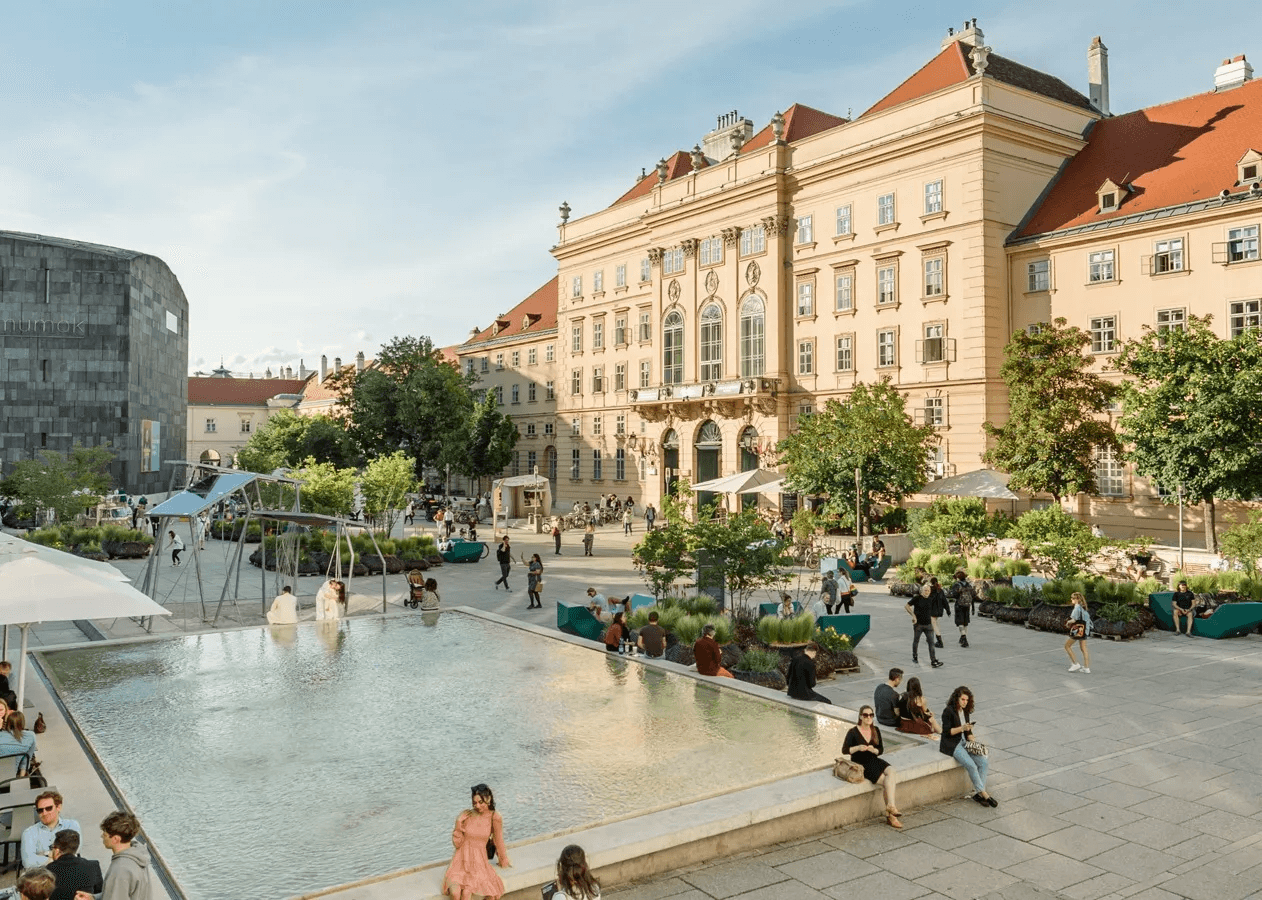
Of course, and how! On the biodiversity side, we are running a lovely artistic project with Anita Fuchs. She works with wildflowers and entirely local, wild species in the courtyard in front of the MQ. Our aim here is not to create that familiar, uniform, aesthetic “English lawn” look; it is to provide real biodiversity in the middle of the city. We now have our own insects, our own bees and a functioning natural cycle in this area.
And what kind of reactions are you getting from people, from visitors? What do they think of the site’s new look?
In a word, people love it! So far, we have received only positive feedback.
I’m very glad to hear that. Recently, I have been observing a very strong trend in Vienna in general as well, such as the rewilding of vacant spaces and the reintegration of native flora into the city.
Absolutely. Just as in other major European cities, there are huge projects under way in Vienna right now in this direction. You can easily see a similar situation in Paris or Berlin. We all know that, with the climate crisis, cities are now heating up far beyond the norms people are used to. And the most natural way to truly cool a city and make it livable again is by planting trees.
I couldn’t agree more. I congratulate you and the entire team who contributed to bringing such a visionary project to life. And thank you very much for taking the time to speak with me.
No, thank you; it was a great pleasure for us to host peyzajMAG here as well.
In conclusion:
Looking beyond the reports, this green revolution at the MQ is in fact a living micro-laboratory of Vienna’s “Smart Klima City Wien” vision, targeted for 2040. The future projection highlights photovoltaic panels to be integrated into the roofs of the mumok and the Leopold Museum without disrupting the city skyline, as well as the active use of geothermal energy.
What is more, the goal is for the site’s blue-green infrastructure to connect with neighboring districts such as Spittelberg and Neubau to create a continuous urban ecological corridor. Beginning with tactical urbanism steps and becoming permanent through the principles of ecological determinism, this vision is the most concrete proof of how historic centers condemned to hard surfaces can be transformed into resilient, carbon-negative ecosystems.
So it turns out that, when there is the will, concrete can be torn up and turned into green space, historic site or not, unlike here at home...
read on
Related stories
The Place of Landscape at the COP31 Table: From Belém Indicators to the Antalya Summit
In the lead-up to the COP31 Antalya Summit, peyzajMAG examines the Belém Indicators, the Rio Synergy, and the strategic imperative of landscape architecture in shaping climate-resilient cities.

"Why Is Our Wardrobe Never Full? The Ecological Footprint of Fast Fashion with Dr. Ceren Özcan"
Dr. Ceren Özcan, author of Zero-Waste Living writes for peyzajMAG about the consumer culture behind the "I have nothing to wear" dilemma and the hidden water and climate costs of fast fashion.
The Transformation That Tore Up Concrete in Vienna: Museumsquartier Goes Green
We met on-site with Museumsquartier Director Bettina Leidl to discuss the MQ Goes Green project, green transformation data, and visitor experiences. Discover the full feature in peyzajMAG!
Hear about the next issue first
Leave your email and we will write when there is something new. We use it for nothing else.