"What Do I Care About a Beautiful City?": The Landscape of Happiness with Assoc. Prof. Dr. Emrah Yalçınalp
We interviewed with Assoc. Prof. Dr. Emrah Yalçınalp about neuroscience, sense of belonging, and public psychology: Landscape is not the makeup of the city, but its life support system!
This story was originally published in Turkish. Read in Turkish
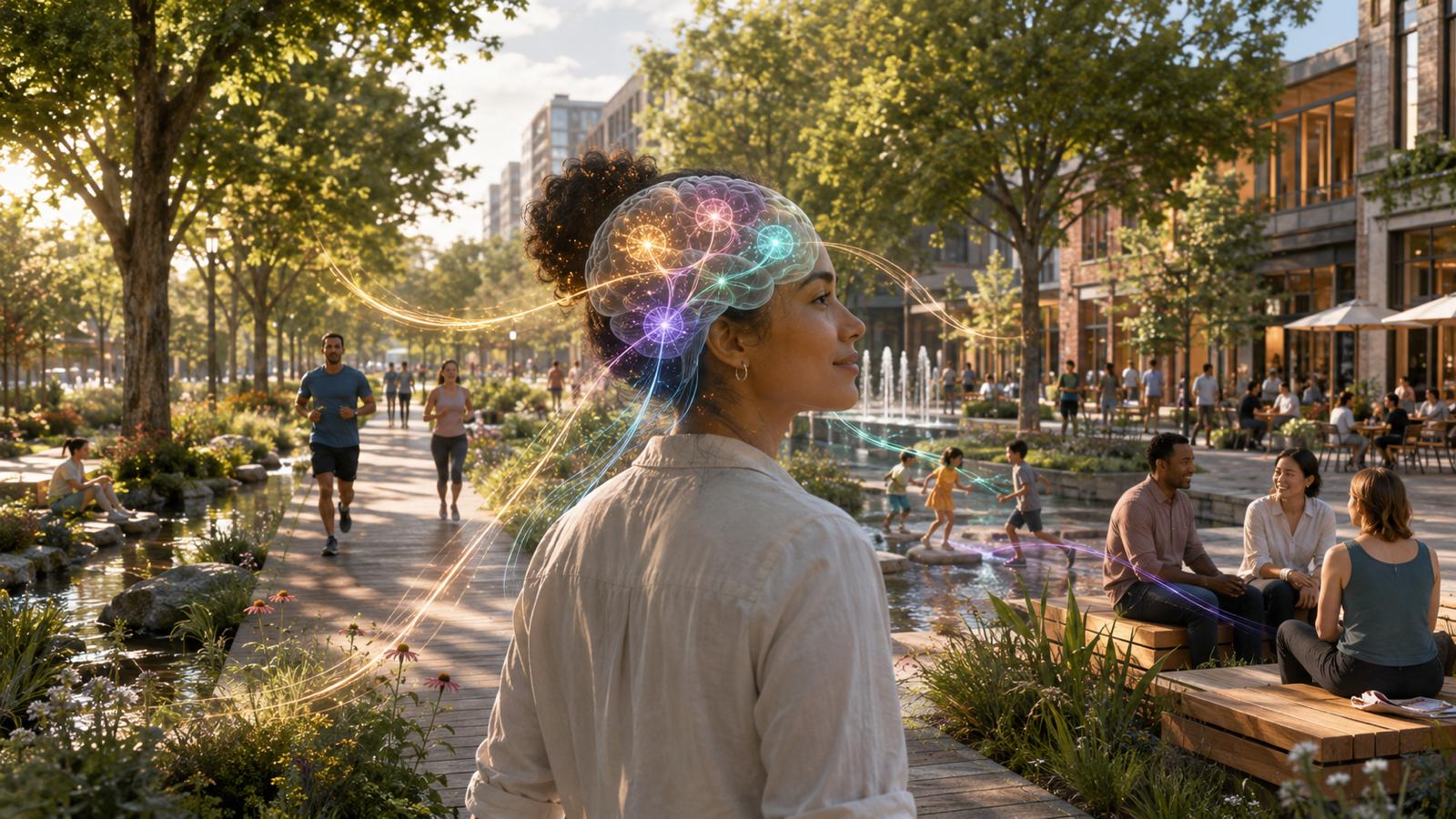
Can landscape architecture make people happy? We talked with Assoc. Prof. Dr. Emrah Yalçınalp about the relationship the brain establishes with space; the design equivalents of dopamine, endorphins, serotonin, and oxytocin; why green spaces cannot settle for just being "beautiful"; and whether landscape architecture can genuinely produce happiness.
Let's start from the most fundamental point: Why should a city or society care whether people are happy?
Because happiness is not merely a pleasant expression that appears on a person's face. It is closely related to the capacity for attention, learning, decision-making, creativity, establishing social relationships, and recovering in the face of difficulties. A significant portion of the mental energy of a person living under constant stress goes into managing the threat, not producing. You cannot expect the brain to compose a symphony while it is putting out fires.
Therefore, people feeling safe, valued, healthy, and a sense of belonging is not just a matter of individual comfort. It has a broad sphere of influence, ranging from work productivity and education to social trust and the protection of public spaces. Happiness here is not a childish optimism in the form of "let everyone walk around joyfully all the time"; it is the state of well-being that enables humans to use their mental and social capacities.
Successful landscape architecture gains importance right at this point. A high-quality living environment can reduce a person's stress load; it can help them gather their attention, move, interact, produce, and reconnect with everyday life.
Does the human brain really want us to be happy?
Let's speak frankly: The brain's main issue is not our happiness, but our survival. The brain is not a personal development expert; it doesn't wake up saying, "Be the best version of yourself today." Rather, it's like an overly suspicious security chief who has been working without a shift change for a few hundred thousand years.
It rewards our feeding, moving, being in a safe place, completing a task, connecting with other people, and being accepted by the community. Because all of these have historically increased our chances of survival. The feelings we call pleasure, relaxation, trust, and satisfaction are also the brain's methods for repeating these beneficial behaviors.
In short, the brain uses happiness not as an ultimate goal, but as a tip for correct behavior.
So, is happiness just the right mix of a few chemicals?
If only it were that easy. Then we would open happiness kiosks next to pharmacies, and order double dopamine, with a side of low-foam oxytocin.
Happiness is not a one-dimensional concept that everyone agrees upon. Dopamine, endorphins, serotonin, and oxytocin are not four cheerful clerks working independently of each other inside the brain, either. They are parts of complex systems that work together with different neural networks, hormones, personal experiences, and social conditions.
For this reason, saying "dopamine equals success" or "oxytocin equals belonging" does not explain the biological mechanism in its entirety. However, these are extremely useful design lenses that allow us to understand the relationship between basic human needs and spatial experience.
I roughly read them like this: Dopamine is related to achieving and exploring, endorphins to moving and feeling alive, serotonin to being valued and visible, and oxytocin to trusting and belonging.
Where does landscape architecture stand among these four needs?
Right in the middle. Because a good landscape does not only offer a person an image to look at. It gives them the opportunity to progress, explore, move, rest, be visible, interact, remember, and connect to a place.
The capacity of landscape architecture to produce happiness stems from its ability to meet these four needs within the same spatial system. Of course, we do not forget ecological and economic performance here. But just as a place doesn't have to make people unhappy while functioning ecologically, it shouldn't turn into a plastic flowerpot catalog from an ecological standpoint while making people happy.
Why is a space sometimes etched in our memory while sometimes it leaves no trace?
Because memory doesn't just record images; it works in tandem with emotion. The hippocampus plays a role in memory formation, and the amygdala plays a role in evaluating stimuli that carry emotional significance, in particular. When we remember an event, the emotion of that event often comes out of the package as well.
Cities are therefore not just physical arrangements where buildings, roads, and parks come side by side. They are also giant memory environments where emotions are stored.
The park you played in as a child, the area where your first concert was held, the grove where you picnicked with your family, the square where your graduation ceremony took place, or the tree you walk past every morning goes beyond its physical existence over time. That place is no longer composed of coordinates; it becomes one of the actors in your life story.
How does dopamine appear in landscape design?
Dopamine is the pop star of the neurochemical world. Its name is mentioned everywhere, and it gets credited even for jobs it didn't do. However, dopamine should be considered not only with pleasure, but with motivation, anticipation, learning, reward-seeking, and the repetition of behavior.
Humans take action not only when they reach the reward, but also when they feel they can reach it. Climbing up to a viewpoint, completing a route, advancing from different elevations, succeeding in a play task, or discovering a hidden detail in the garden can feed this system.
A well-designed space tells the user, "Go a little further, there is something there." A poorly designed one tells the whole joke right at the entrance.
Does a space need not to show everything?
Yes, but the user doesn't need to feel like their kidneys are about to be stolen, either. There is a fine line between exploration and insecurity.
A path whose end is not visible at first glance but does not create the fear of getting lost, a viewing terrace partially visible behind the plants, a water feature whose sound is heard but is not yet visible itself, or a destination that can be reached from different routes keeps curiosity alive.
This is a safe game of probability played within the city. Good design does not obscure everything completely; it leaves the user small secrets that they can solve.
Is it enough to put a few pieces of sports equipment in parks for endorphins?
No. When you put three pieces of fitness equipment in a park, you haven't solved public health. Especially if you placed those devices under the sun, disconnected from the walking route, and at a point where no one would feel comfortable, what you have done is an open-air conscience-clearing station rather than an exercise area.
Endorphins are associated with the regulation of pain perception, relief of stress, and the feeling of well-being after exercise. However, a healthy landscape is not one that constantly wags a finger at people saying, "You must exercise," but a landscape that makes movement natural and desirable.
Walkable routes, bicycle paths, opportunities for swimming and contact with water, playgrounds suitable for age groups, climbing surfaces, shaded trails, and rest pockets are important for this reason.
What is the relationship between serotonin and public space?
Calling serotonin directly the "prestige chemical" would be too reductionist from a scientific standpoint. Nevertheless, feeling valued, visible, and accepted is one of the fundamental components of human well-being.
People can read the quality of the spaces they use as an indicator of the value given to them. A well-maintained, safe, and accessible public space gives the user the message, "Your life matters in this city." Neglect and exclusion say the exact opposite: "Make do over there for now."
Cities speak. Sometimes they do this with a canopy, a clean toilet, and an accessible ramp; sometimes by doing none of these.
Is a prestigious public space an expensive public space?
No. There is no scientifically proven relationship between an abundance of travertine and human dignity.
True spatial prestige is the ability of children, the elderly, individuals with disabilities, women, and different economic groups to be in the same place without feeling uninvited. The right to the city emerges most visibly here.
Squares, stages, exhibition surfaces, local production areas, and community gardens not only give people the opportunity to be present but also to make their identities and talents visible. When a person ceases to be a customer of the space and becomes one of its actors, the feeling of being valued strengthens.
This is exactly where the issue we call landscape justice begins: The city's best amenities should not be merely the decor of the most powerful classes.
Is it enough to put a large "socialization area" in the park for oxytocin?
If only people became friends by following the arrows on the site plan.
Oxytocin is associated with social bonding, closeness, trust, and caregiving behaviors. However, it does not produce the same result in every environment and on everyone. A safe social context, familiarity, and positive interaction are required.
A landscape architect cannot directly produce oxytocin, but can prepare the environments where people can establish safe and repeated relationships. Tables where people can eat together, seating arrangements suitable for small groups, edges where adults can meet while children play, community gardens, and common production areas lay the groundwork for these relationships.
Sociality sometimes starts not in large squares, but in a small pocket where two benches are placed at the right angle.
Does belonging only arise from relationships between people?
No. A person can also bond with a tree, a walking path, an orchard, or the birds that return every year.
Waiting for a familiar tree to bloom, walking the same route throughout the seasons, or participating in the care of an orchard establishes a relationship between humans and place. The user begins to see themselves not as a temporary customer of the landscape, but as part of the ongoing life cycle.
Belongingness is also somewhat the feeling that the space knows you. Of course, the park doesn't really know you; but if you know which of its trees blooms first, your relationship has already begun.
Do green spaces really reduce stress, or are we romanticizing this a bit?
There is an expanding field of research showing that contact with nature is associated with reduced stress and a positive emotional state. However, a conclusion like "You saw a tree, depression is over" is not scientific.
Long-term and uncontrollable stress can negatively affect attention, memory, decision-making, and emotion regulation processes. It is also not possible to constantly escape from sources such as poverty, traffic, noise, insecurity, extreme heat, crowding, and unqualified construction.
A high-quality landscape does not solve all these problems alone. However, it can support a person's psychological resources against stress by providing them with the opportunity to move, stop, be alone, interact, succeed, and start again.
For this reason, a high-quality green space is not a luxury or a blush applied to the city's cheek. It is a part of the public health infrastructure.
Why should collective memory be designed?
Because if we are really going to talk about sustainability, we cannot measure the success of a design by the drone footage on opening day.
Collective memory is formed by the accumulation of individual experiences lived in the same space at different times. Holidays, concerts, protests, children's games, sports events, wedding photos, and ordinary walks transform the physical environment into a social narrative.
The designer cannot completely write the script of this story. But they can set a good stage. A stage where people can come back, use in different ways, and leave a mark of themselves...
Ultimately, can a landscape architect design happiness?
They cannot design it directly, of course. We cannot give a command to the human brain saying, "Now a little dopamine, followed by two measures of oxytocin." It would also not be correct to say that a park mechanically secretes any neurochemical.
But we can design the conditions under which happiness can emerge.
We can support the feeling of achievement by offering people attainable goals and exploration opportunities; physical well-being by facilitating movement and contact with nature; social prestige by ensuring everyone feels valued and visible; and belonging by creating safe encounters and shared experiences.
When these come together, it is not just a "beautiful" space that emerges. It is the living environment of people who move, produce, relate to their surroundings, feel valued, and are connected to the place they live.
So, are landscape architects considered somewhat like superheroes?
Depends on where you look from. We don't need to put on a cape and go down to the park, of course. But we can prepare environments where people can re-feel their own strengths, health, values, and that they belong to each other. In other words, we don't save people's lives; we design spaces where people can be the heroes of their own lives.
But for this, landscape architecture needs to get out of the "beautiful, sweet, nice" triangle. A space should not only look good; it should work, be used, be remembered, and make a measurable contribution to society.
Because landscape architecture is not the makeup of the city, it is its life support system.
read on
Related stories
Designing the Urban Future with Prof. Dr. Savaş Zafer Şahin: The Future Doesn't Just Happen, It Is Co-Created
Prof. Dr. Savaş Zafer Şahin writes for peyzajMAG on urban future design envisioning the future of cities beyond technological illusions through 'homo urbanus' and collective intelligence.
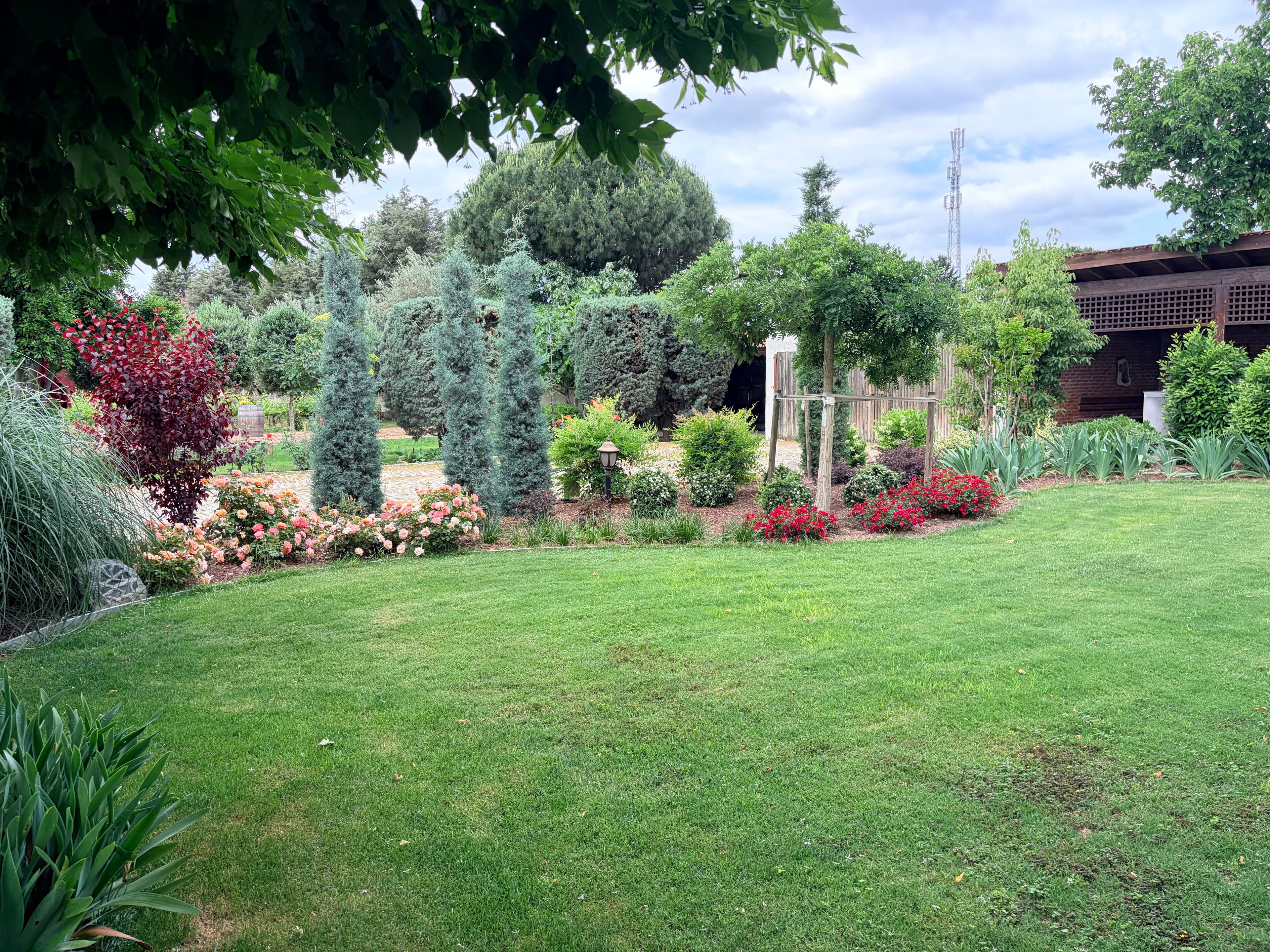
Osmanbey Nursery & Landscape: "A Solution Not Tested in the Field is No Solution at All"
We spoke with Ayşe Nur Sarıkaya Bulan and Bülent Kurtuluş Bulan, owners of Osmanbey Nursery & Landscape, about field realities, ongoing maintenance challenges, and selecting the right materials.
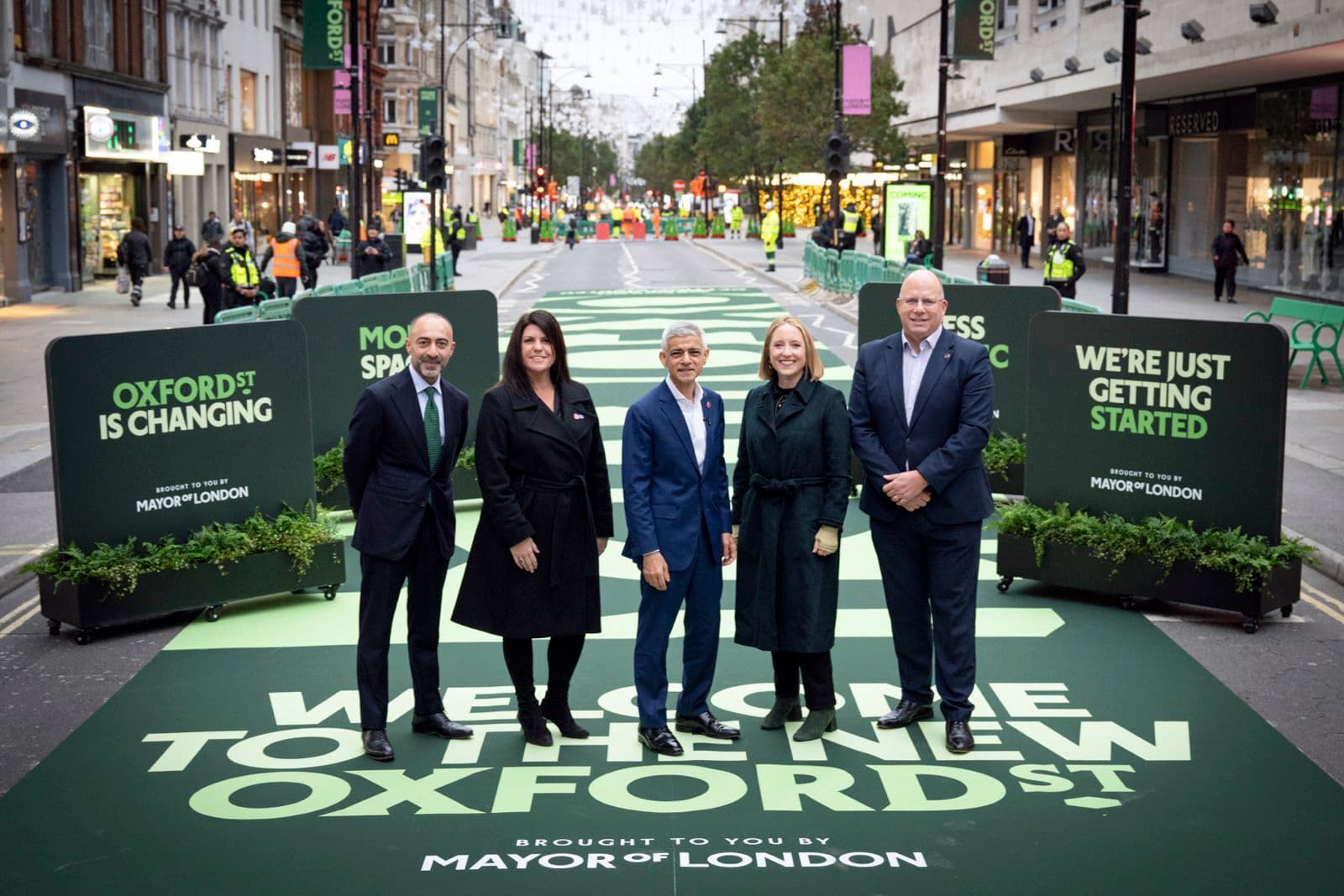
A New Era on Oxford Street: London's Famous Street Now Belongs to Pedestrians
An approximately 1-kilometer section of London's most famous shopping street, Oxford Street, was permanently closed to vehicle traffic as of yesterday. The project, championed by Mayor Sadiq Khan for years, is receiving support from retailers and pedestrian rights advocates.
Hear about the next issue first
Leave your email and we will write when there is something new. We use it for nothing else.