Designing the Urban Future with Prof. Dr. Savaş Zafer Şahin: The Future Doesn't Just Happen, It Is Co-Created
Prof. Dr. Savaş Zafer Şahin writes for peyzajMAG on urban future design envisioning the future of cities beyond technological illusions through 'homo urbanus' and collective intelligence.
This story was originally published in Turkish. Read in Turkish
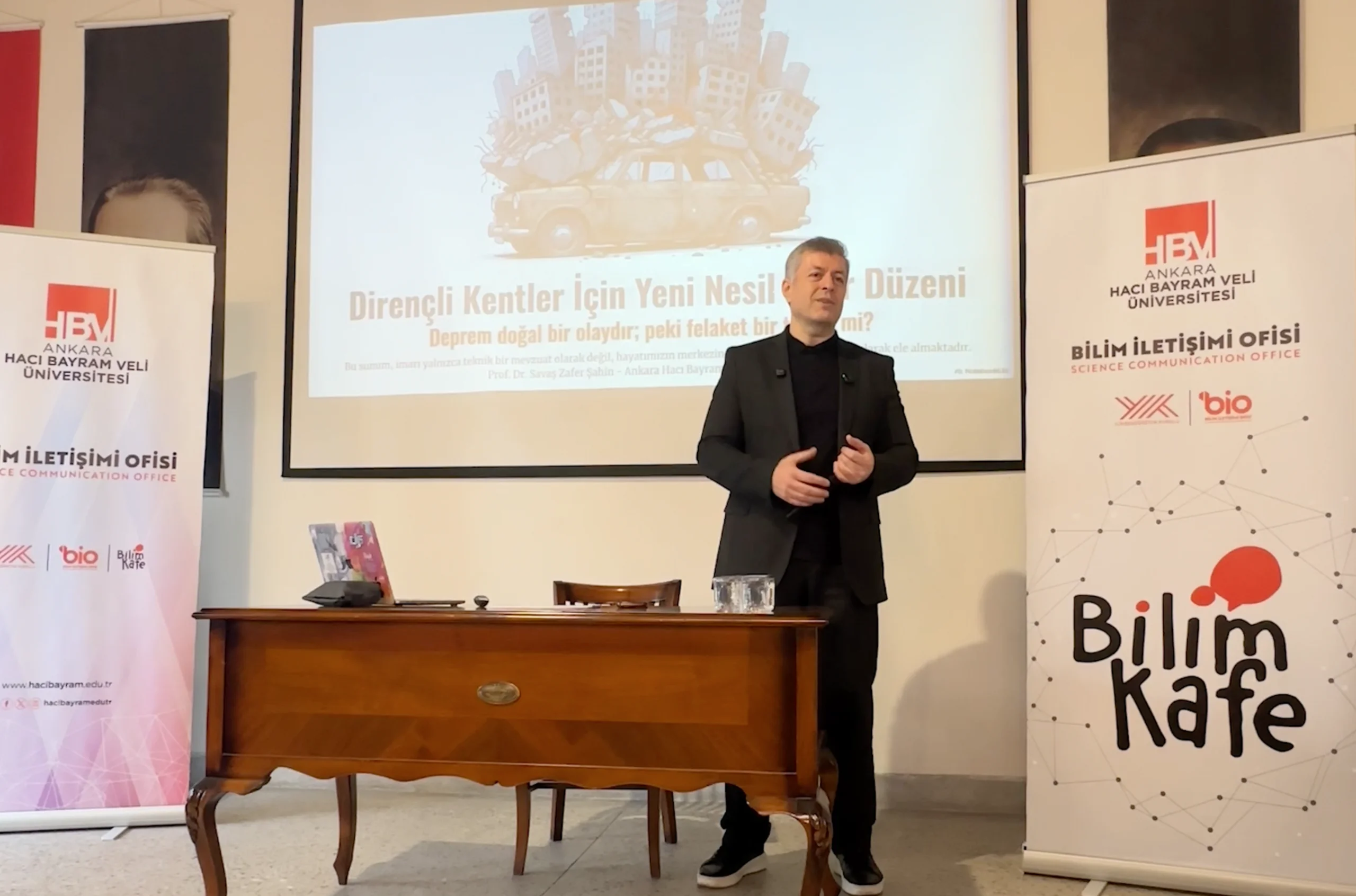
When we speak of a city's future, most of us envision high-rise buildings, driverless vehicles, AI-managed infrastructures, and flawless scale models. However, the future is not a bright landscape waiting for us in the distance. A road we open today, a riverbed we open or close to development, a nursery we operate, a tree we protect, a piece of data we share, and a neighborhood we listen to or silence are all pieces of the future that have already begun. Urban future design is exactly the way of thinking and acting that makes this reality visible.
The starting point of this approach is simple: The future of humanity will largely be urban; but what kind of urban future we will live in is not pre-written. Cities are not physical heaps that develop spontaneously; they are the spatial manifestations of values, decisions, investments, conflicts, and daily habits. Therefore, urban future design is not a fortune-telling endeavor trying to predict tomorrow, nor is it merely a technical planning activity conducted solely by experts. It is an effort to collectively discuss how we want to live in the future, to make options visible, and to test our preferences today.
At the center of this effort is homo urbanus—that is, the human who not only uses the city but reproduces it every day. The student waiting for the bus, the disabled person trying to navigate the sidewalk, the shopkeeper opening their store in the morning, the elderly person seeking shade in the park, the parent taking their child to school, and the neighborhood resident looking for a safe place during a disaster; these are the actors who carry the knowledge of the city in their bodies. They know the fears, habits, and possibilities that a planning sheet cannot see. Consequently, the city resident is not a "user" whose opinion is sought at the end of the decisions, but a partner who possesses the knowledge of the future and the foundational right to it (Şahin, 2026).
Here, the distinction between futurism and future design is important. Futurism often produces impressive images and technological promises. Urban future design, on the other hand, asks more arduous questions: What are we doing, with whom, based on what knowledge, with what resources, and to improve whose life? It investigates not only whether a project is possible, but whether it is fair, meaningful, and long-lasting. Just as Ruth Levitas considers utopia as a method of imagining society differently, it considers urban imagination not as an escape, but as a tool for criticizing the present and building viable alternatives (Levitas, 2013).
Therefore, the approach in question cannot be contained within a single discipline. The climate crisis is not solely the subject of environmental engineering; housing is not solely architecture's; transportation is not solely traffic engineering's; loneliness is not solely psychology's; data is not solely informatics' subject. A subway line simultaneously changes housing values, equality of access, carbon emissions, and daily time use. A park is a matter of health, security, care economy, child development, and social encounters as much as it is of ecology. Urban future design brings together the scientist's evidence, the artist's imagination, the designer's spatial intuition, the administrator's implementation capacity, and the citizen's everyday knowledge at the same table.
However, merely sitting at the same table is not participation in itself. Genuine participation requires the decision to be changeable. Calling people to approve a pre-made decision produces a democratic decor; it does not produce collective wisdom. A well-designed process first defines the problem together, makes different interests and inequalities visible, compares options, manages disagreement without suppressing it, and monitors the outcome of the decision taken. Patsy Healey's collaborative planning approach and Elinor Ostrom's studies on the commons have long demonstrated the importance of multi-actor institutions based on local knowledge (Healey, 1997; Ostrom, 1990).
In this framework, technology is also a tool, not a goal. A city equipped with sensors but not sharing its data; multiplying cameras while people do not feel safe; developing applications while excluding the elderly, the poor, or those without digital access can only be "half-smart." A smart city is not the city that buys the most devices; it is the city that transforms data into public benefit, protects privacy, and brings the citizen's knowledge into decision-making processes. Open data dashboards, participatory mapping, and digital platforms should not replace face-to-face dialogue, but expand it.
So how does this idea turn into practice? First, the city's past, identity, and current vulnerabilities are read. Then, different future scenarios are built; each scenario is tested in terms of justice, ecological limits, cost, and institutional capacity. The selected ideas are transformed into small experiments at the neighborhood scale: a temporary pedestrian street, a safe school route, participatory budgeting, a shaded square, or an open dataset. The results are measured, mistakes are recorded without being hidden, and successful practices are scaled up. Thus, future design becomes not a one-off vision document, but a cycle of designing, testing, learning, and adapting.
The issues of Turkish cities such as disaster risk, housing difficulties, climate pressure, migration, aging, transportation, and institutional fragmentation cannot be separated from one another. In the face of this complexity, neither a single hero administrator nor a ready-made model imported from the outside is sufficient. Municipalities, the central government, universities, professional chambers, the private sector, city councils, and neighborhood communities need to establish a continuous learning relationship. Facilitation here is not a secondary communication skill, but the fundamental public capacity that sets different knowledge and powers to work around a common problem.
Ultimately, urban future design is more of a professional mindfulness and a moral invitation than a prescription. It suggests asking this question in the face of every decision: What kind of life will this choice make possible for whom tomorrow? Fairer, more resilient, more joyful, and more livable cities are not built solely through large projects. A child's shortened route to school, a protected water basin, an accessible sidewalk, a neighborhood that is listened to, and a shared piece of data also change the future. If the city is our collective work, its future is a task too collective to be left to others.
This collective work is being embodied by the productions of a multidisciplinary network developing around urban future design since the beginning of 2025. With the contributions of those involved in this network, which brings together different expertise, institutions, and urban experiences, upper-scale planning studies were carried out in Ankara and Izmir; exhibitions, competitions, academic studies, and research projects were realized. While this same accumulation is shared with a wider public through the content produced on the Urban Future Design YouTube channel, it is also aimed to be published as a book soon. Thus, urban future design becomes not just a call for the future, but a living public practice that learns, multiplies, and expands its impact as it is co-produced. Thus, perhaps it may also be possible to pave a new way that will allow the development of works and actions appropriate to the framework of urban future design.
@kentselgelecektasarimi
www.kentselgelecektasarimi.com
References
Healey, P. (1997). Collaborative Planning. Macmillan.
Urban Future Design Youtube Channel: https://youtube.com/@kentselgelecektasarimi?si=3xq5tHTlPxwv66AV
Levitas, R. (2013). Utopia as Method: The Imaginary Reconstitution of Society. Palgrave Macmillan.
Ostrom, E. (1990). Governing the Commons. Cambridge University Press.
Şahin, S. Z. (2026). Urbanus: How Should the Urban Future Be Designed? [Kentsel Geleceği Nasıl Tasarlamalı?]. Book manuscript in preparation for publication.
read on
Related stories
"What Do I Care About a Beautiful City?": The Landscape of Happiness with Assoc. Prof. Dr. Emrah Yalçınalp
We interviewed with Assoc. Prof. Dr. Emrah Yalçınalp about neuroscience, sense of belonging, and public psychology: Landscape is not the makeup of the city, but its life support system!
Osmanbey Nursery & Landscape: "A Solution Not Tested in the Field is No Solution at All"
We spoke with Ayşe Nur Sarıkaya Bulan and Bülent Kurtuluş Bulan, owners of Osmanbey Nursery & Landscape, about field realities, ongoing maintenance challenges, and selecting the right materials.
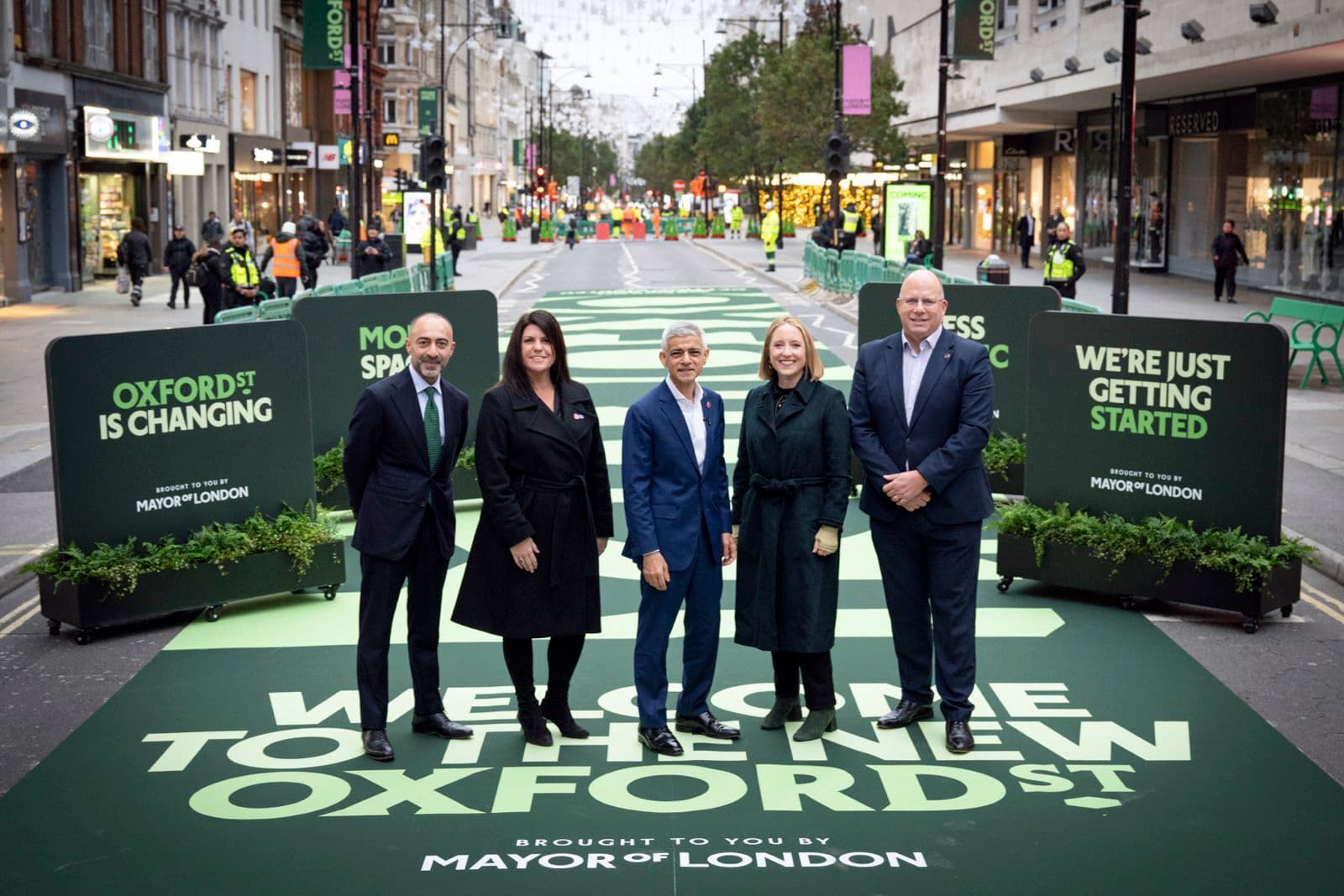
A New Era on Oxford Street: London's Famous Street Now Belongs to Pedestrians
An approximately 1-kilometer section of London's most famous shopping street, Oxford Street, was permanently closed to vehicle traffic as of yesterday. The project, championed by Mayor Sadiq Khan for years, is receiving support from retailers and pedestrian rights advocates.
Hear about the next issue first
Leave your email and we will write when there is something new. We use it for nothing else.