"Why Is Our Wardrobe Never Full? The Ecological Footprint of Fast Fashion with Dr. Ceren Özcan"
Dr. Ceren Özcan, author of Zero-Waste Living writes for peyzajMAG about the consumer culture behind the "I have nothing to wear" dilemma and the hidden water and climate costs of fast fashion.
This story was originally published in Turkish. Read in Turkish
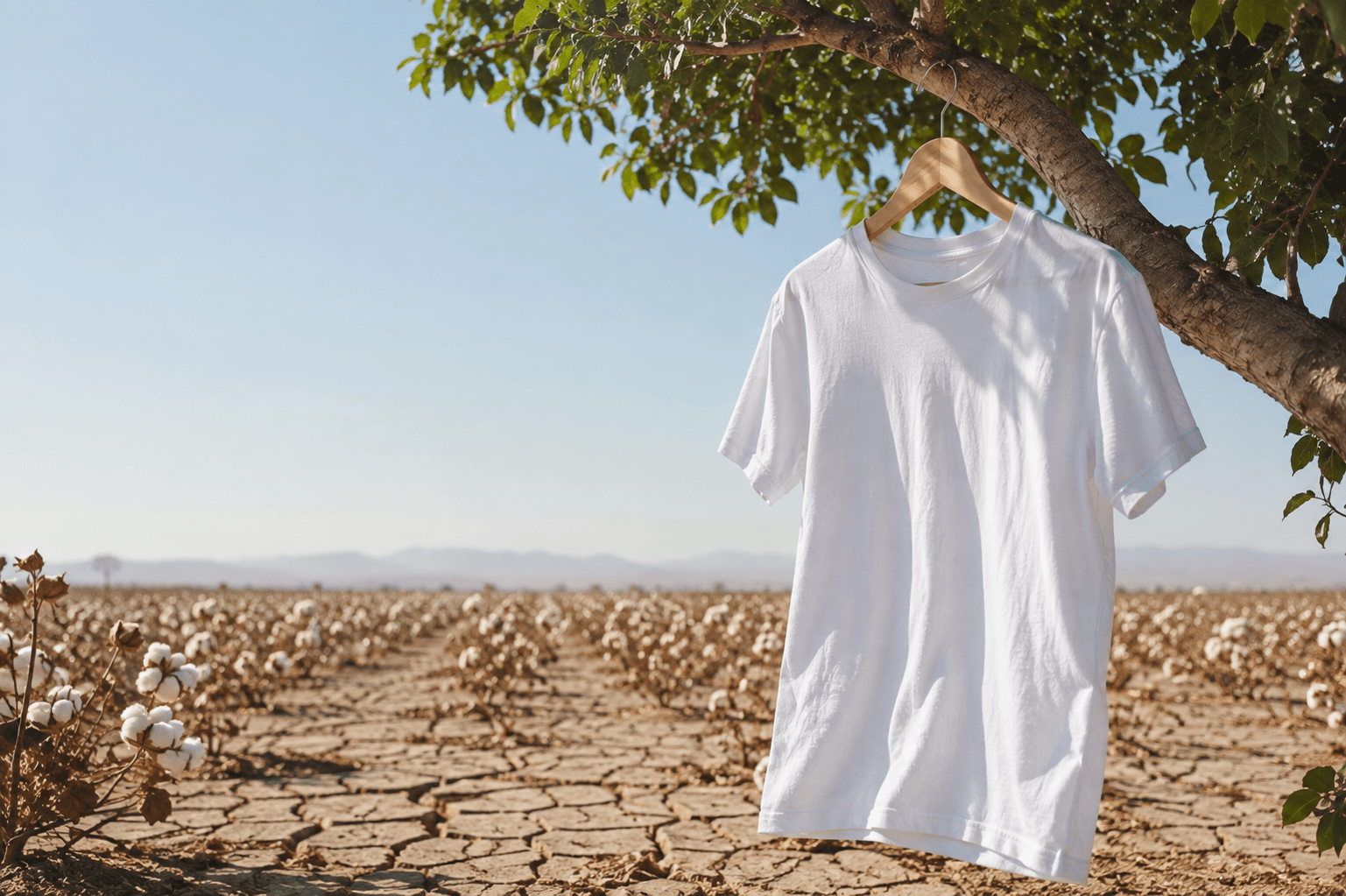
While constantly evolving trends fill our wardrobes, they continue to leave us feeling incomplete. We examine the hedonic adaptation behind our consumption habits and fashion's hidden toll on water, climate, and resources.
We open the closet door. The hangers are full. On the shelves there are folded sweaters, a few shirts, maybe a jacket bought just last month. And yet our hand reaches for the phone almost by reflex. A few minutes later we find ourselves browsing the new season's arrivals.
It may be one of the most familiar sentences of modern life: “I have nothing to wear.”
Yet most of the time the problem is not really that we have nothing to wear. The problem is that what we already own no longer feels like enough.
Fashion has long since stopped being only about what we wear. It also constructs a powerful narrative that dictates how we are supposed to feel. A shirt bought a single season ago can feel “old” even though it has not worn out at all. We start looking for new pieces not because our wardrobe has lost its function, but because we believe it has fallen behind a constantly shifting visual world. And this feeling is not purely individual. The economic model we live within is built precisely to produce it.
The transformation of the fashion industry over the past two decades is one of the most visible examples of this. A production model that once moved through spring–summer and autumn–winter collections has today become a stream of micro-trends renewed almost weekly. Social media platforms have accelerated the cycle even further. It is no longer only brands but algorithms that decide what we ought to want. Something newer lands on our screen while the garment we liked is still in transit.
For this system to work, it is not only production that must be continuously renewed, but dissatisfaction as well.
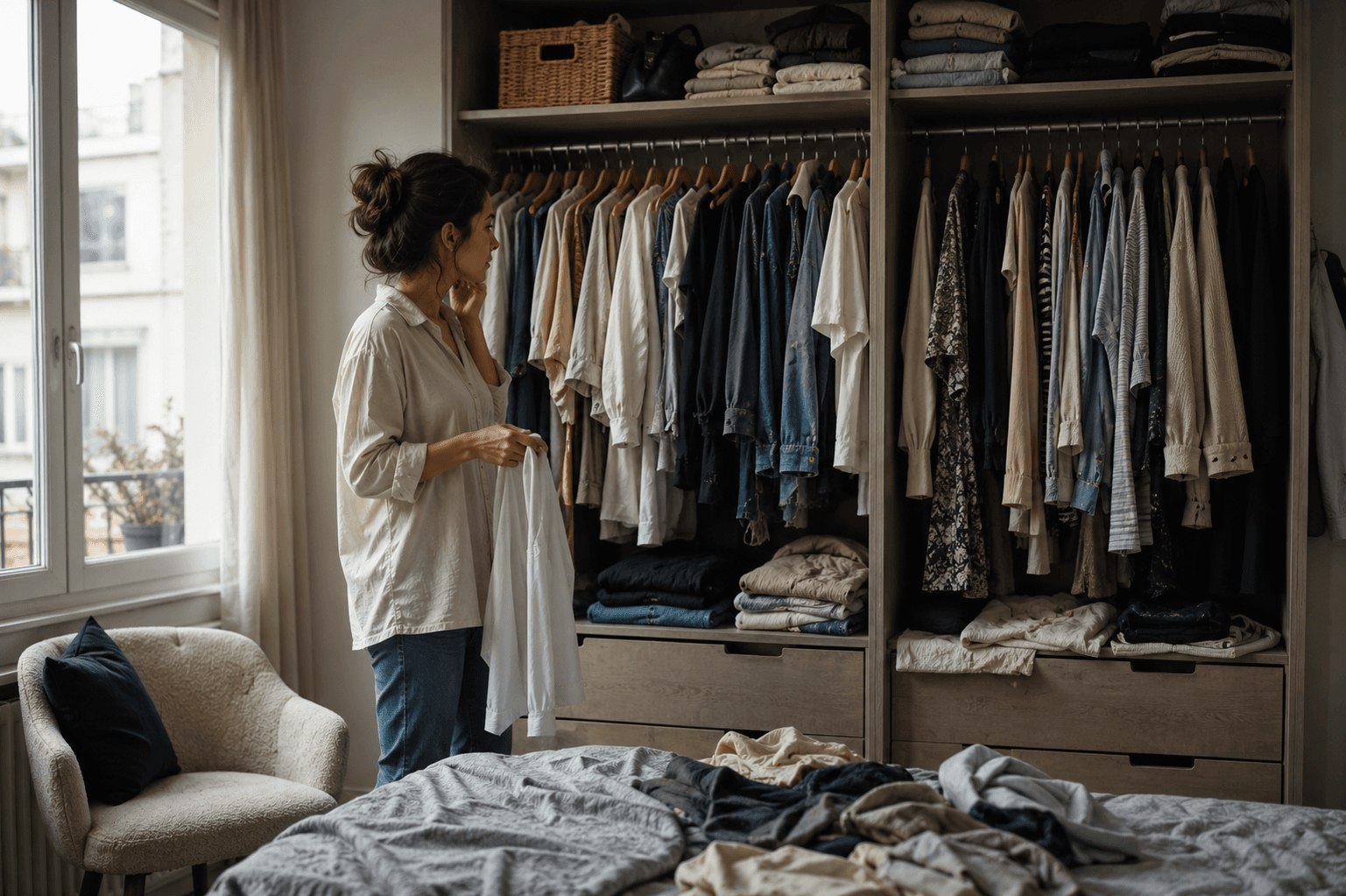
The concept psychologists call “hedonic adaptation” explains this. The happiness we feel on acquiring something new does not last; over time the new situation becomes normal. And once the item we bought has turned into an ordinary part of daily life, the urge to buy something else emerges as the only way to feel that excitement again.
Perhaps this is why so many people today have wardrobes fuller than ever before, and at the same time feel more inadequately dressed than ever.
But the unseen side of this story is far larger than psychology.
Every garment reaches our closet at the end of a long geographical journey. The water used to grow cotton, the fossil fuels burned to produce synthetic fibers, the wastewater flowing out of dyeing plants, the cargo ships crossing continents, the warehouses, the distribution centers, and finally an online purchase that takes only a few seconds… An ordinary shirt hanging in our wardrobe is in fact the last link in a long production chain that connects different parts of the world to one another.
One of the least visible links in this chain is water.
It is estimated that producing a single cotton T-shirt takes an average of 2,700 liters of water, and a pair of jeans roughly 3,000 to 4,000 liters.
Put differently, a few garments that look entirely unremarkable in daily life can mean consuming, in the production process, as much fresh water as a person would drink over several years.
And the issue is not only the volume of water used. In the textile sector, dyeing and finishing processes in particular are held responsible for roughly one fifth of industrial wastewater pollution worldwide. These processes, which involve tens of thousands of different chemicals each year, can directly affect rivers, groundwater and farmland when they are not adequately treated.
A similar picture emerges in terms of climate.
According to the United Nations Environment Programme, the fashion and textile sector accounts for approximately 2 to 8 percent of global greenhouse gas emissions.
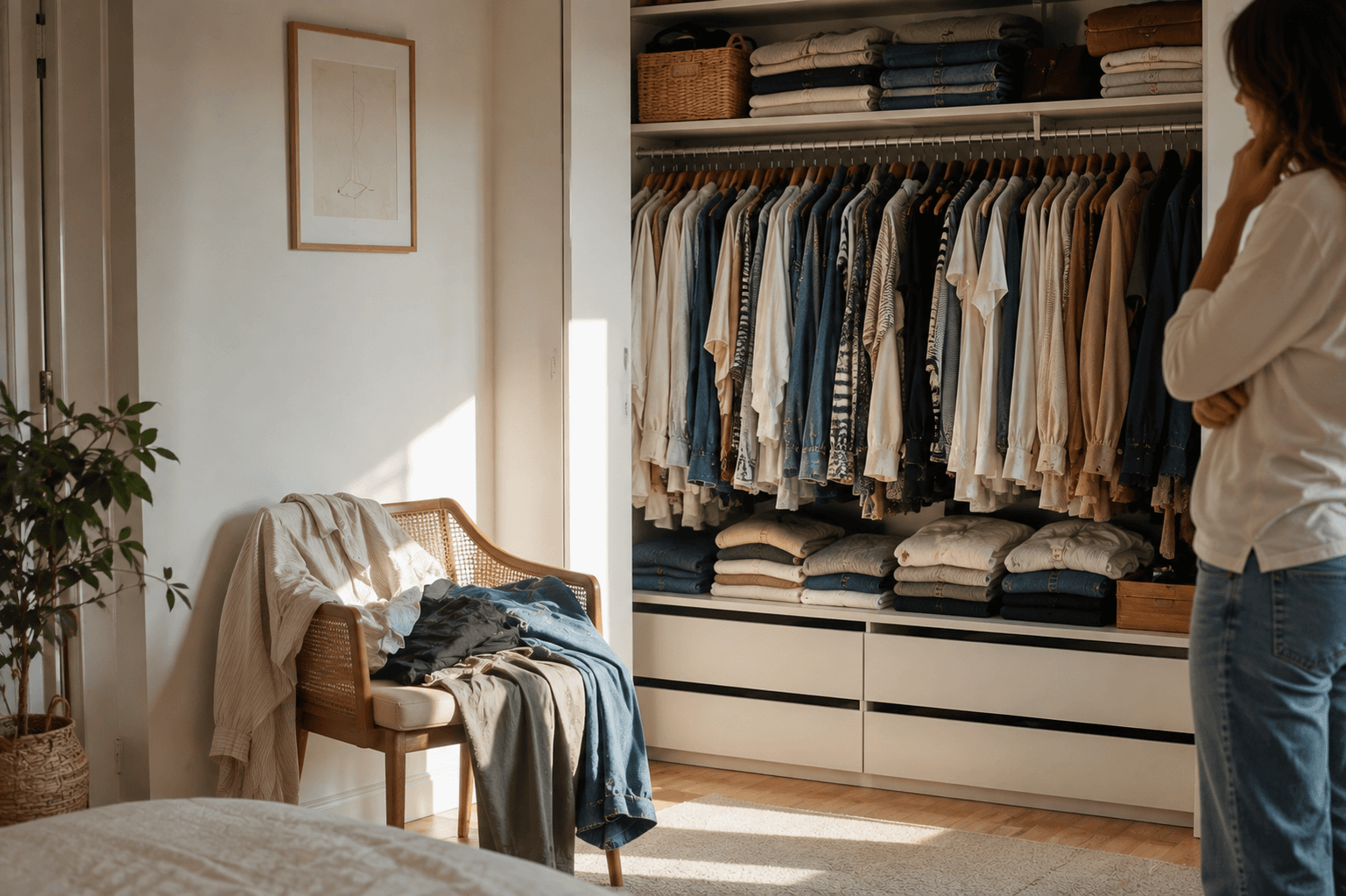
Nor is the problem confined to production; products being discarded within a short time, new collections being launched continuously, and an ever-accelerating cycle of consumption cause this impact to grow a little more each year.
For this reason, reading the question of fashion solely through individual consumption habits leaves the picture incomplete. Every garment we buy also represents a relationship we form with water basins, energy systems, farmland and global logistics networks. When we talk today about drought, water stress and the climate crisis, it is not possible to leave our wardrobe outside that story. Every new piece in our closet is also a silent carrier of invisible natural resources and of ecological costs we often fail to notice.
Fashion, then, is not merely an aesthetic preference; it is also a question of resource management.
Urban planners have said for many years that cities are not made of buildings alone. A city is shaped by invisible flows: water, energy, food, waste, transport. Today textiles need to be added to that list. Our consumption habits are now part of a global metabolism that long ago crossed the boundaries of cities. A shopping decision made in one city can affect water consumption in a basin thousands of kilometers away, energy use in another country, or freight traffic at a port.
Perhaps this is why sustainable fashion is not simply a debate about “greener fabrics.” The real issue is being able to question a culture that treats constant renewal as normal.

What is striking is that more clothes rarely make for a more functional wardrobe. On the contrary, as options multiply, deciding becomes harder. The time spent standing in front of the closet each morning grows longer, while the clothes actually worn start to resemble one another more and more. Excess, more often than not, creates not freedom but an invisible kind of clutter. Perhaps the sentence “I have nothing to wear” is not really about our wardrobe at all, but about consumer culture.
Because the system we live in whispers to us constantly that we are lacking something. It wants us to believe that the new season, the new colour, the new trend will complete us.
Yet what is missing is usually not a garment; it is the steadily weakening relationship we have with the things we already own.
Sustainability sometimes begins not with buying a new product but with developing a new perspective. When we look not at our wardrobe but at the invisible stories that fill it, fashion becomes a matter not only of style but of water, soil, climate and cities. Perhaps then we can begin asking more accurate questions about what is truly missing.
For Further Reading
United Nations Environment Programme (2025). Sustainable fashion to take centre stage on Zero Waste Day. https://www.unep.org/technical-highlight/sustainable-fashion-take-centre-stage-zero-waste-day
European Parliament (2025). Fast fashion: EU laws for sustainable textile consumption. https://www.europarl.europa.eu/topics/en/article/20201208STO93327/fast-fashion-eu-laws-for-sustainable-textile-consumption
European Environment Agency. Textiles and the Environment. https://epthinktank.eu/2022/05/04/textiles-and-the-environment/
read on
Related stories
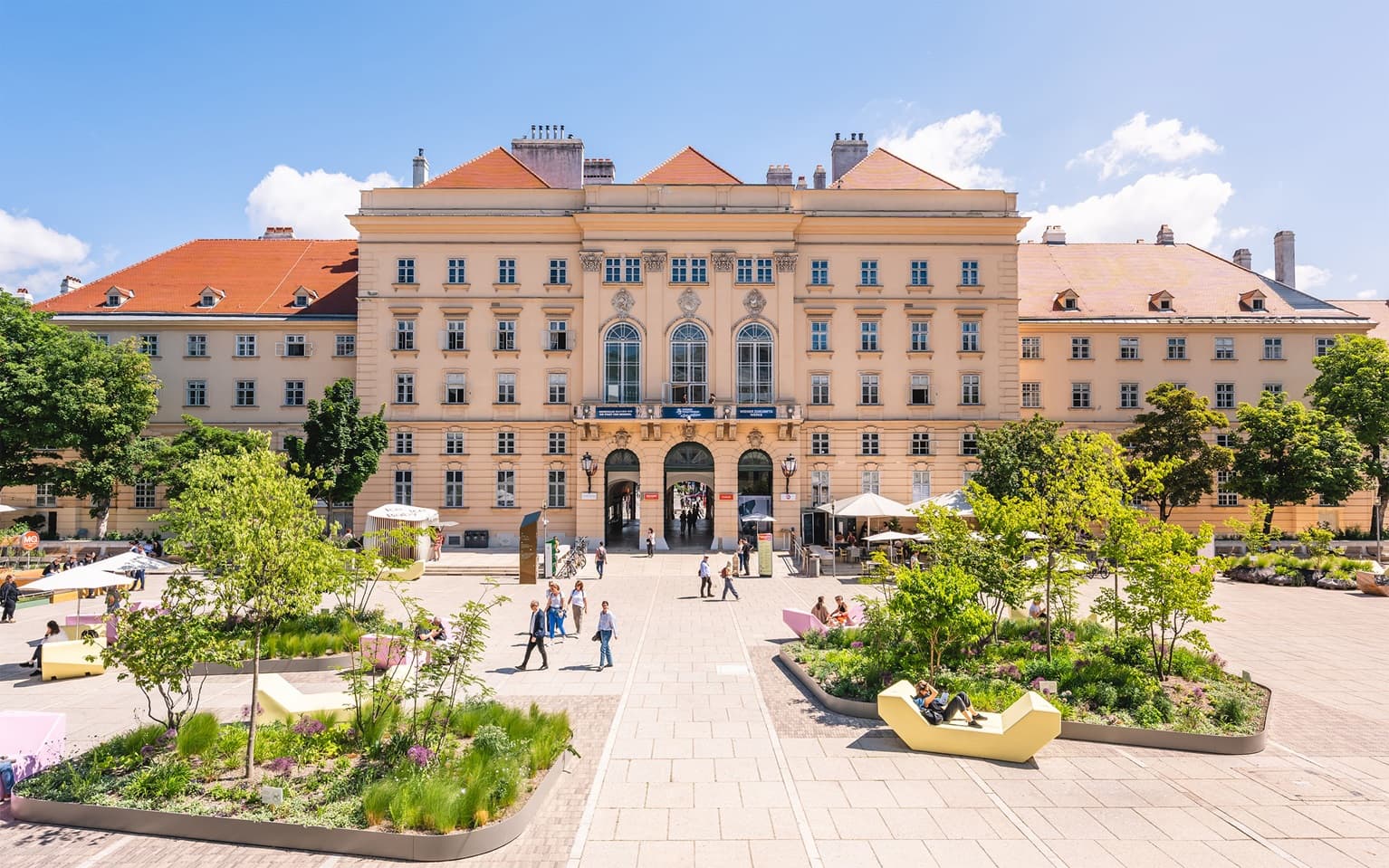
The Transformation That Tore Up Concrete in Vienna: Museumsquartier Goes Green
We met on-site with Museumsquartier Director Bettina Leidl to discuss the MQ Goes Green project, green transformation data, and visitor experiences.
The Place of Landscape at the COP31 Table: From Belém Indicators to the Antalya Summit
In the lead-up to the COP31 Antalya Summit, peyzajMAG examines the Belém Indicators, the Rio Synergy, and the strategic imperative of landscape architecture in shaping climate-resilient cities.
"The Silent Curriculum of Landscape" by Sude Akbal: Nature Literacy in Iğdır
Sude Akbal, a Landscape Architecture student at Ankara University, shares her insights on nature literacy and field experience from the TÜBİTAK 4004 Iğdır project in peyzajMAG.
Hear about the next issue first
Leave your email and we will write when there is something new. We use it for nothing else.