"What the Hand Knows, What the Machine Sees" by İsa Eren Akbıyık: Sketching and Artificial Intelligence
Landscape Architect İsa Eren Akbıyık writes for peyzajMAG about a new design practice that brings together the depth of hand sketching and the vision of artificial intelligence.
This story was originally published in Turkish. Read in Turkish
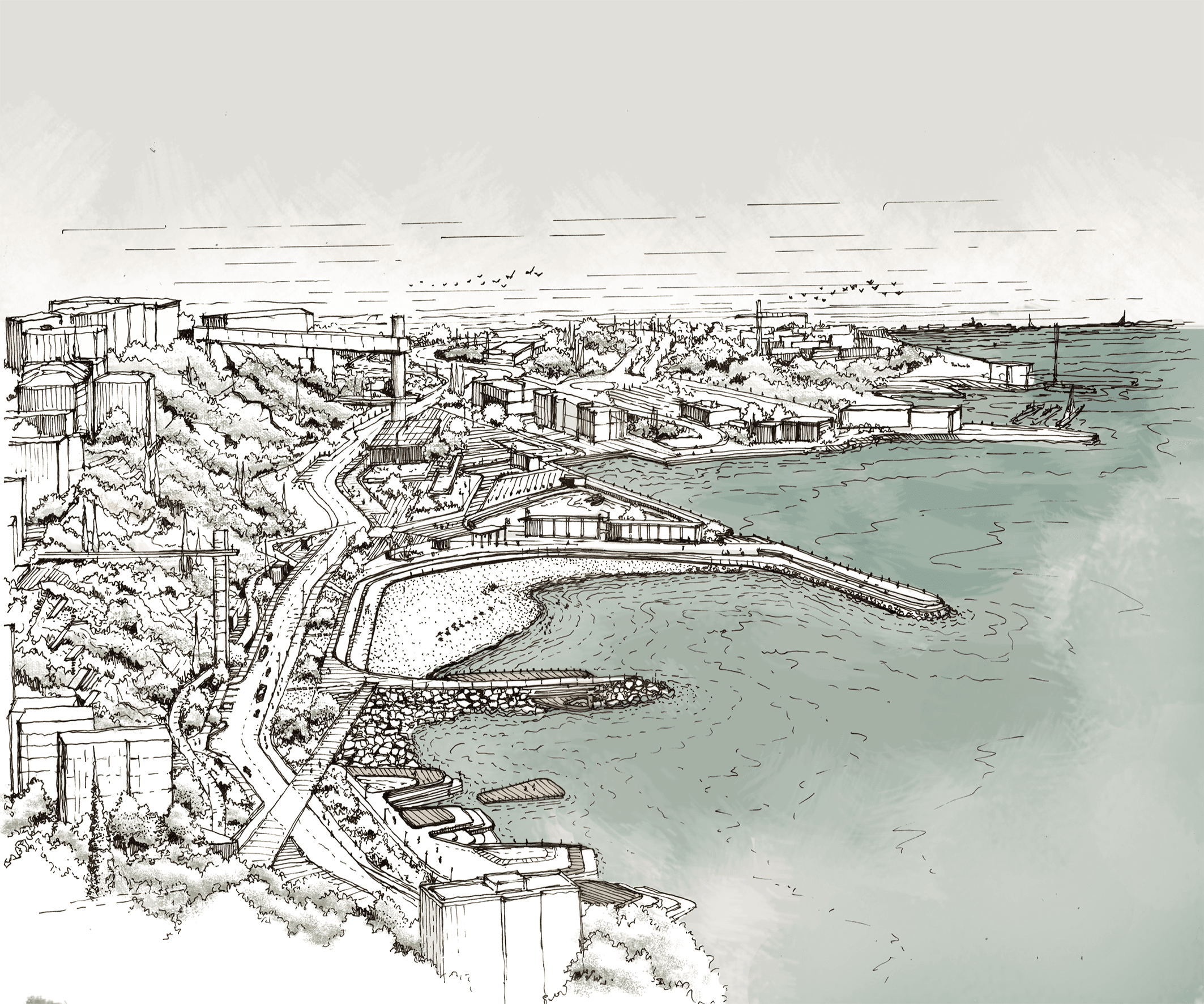
On top of years of hand-drawing practice, AI-assisted production has been added over the past year. The first question this pairing usually brings to mind is: “Is hand drawing dead?”
The question itself is wrong. The hand and the machine are not doing the same job, so neither can kill the other.
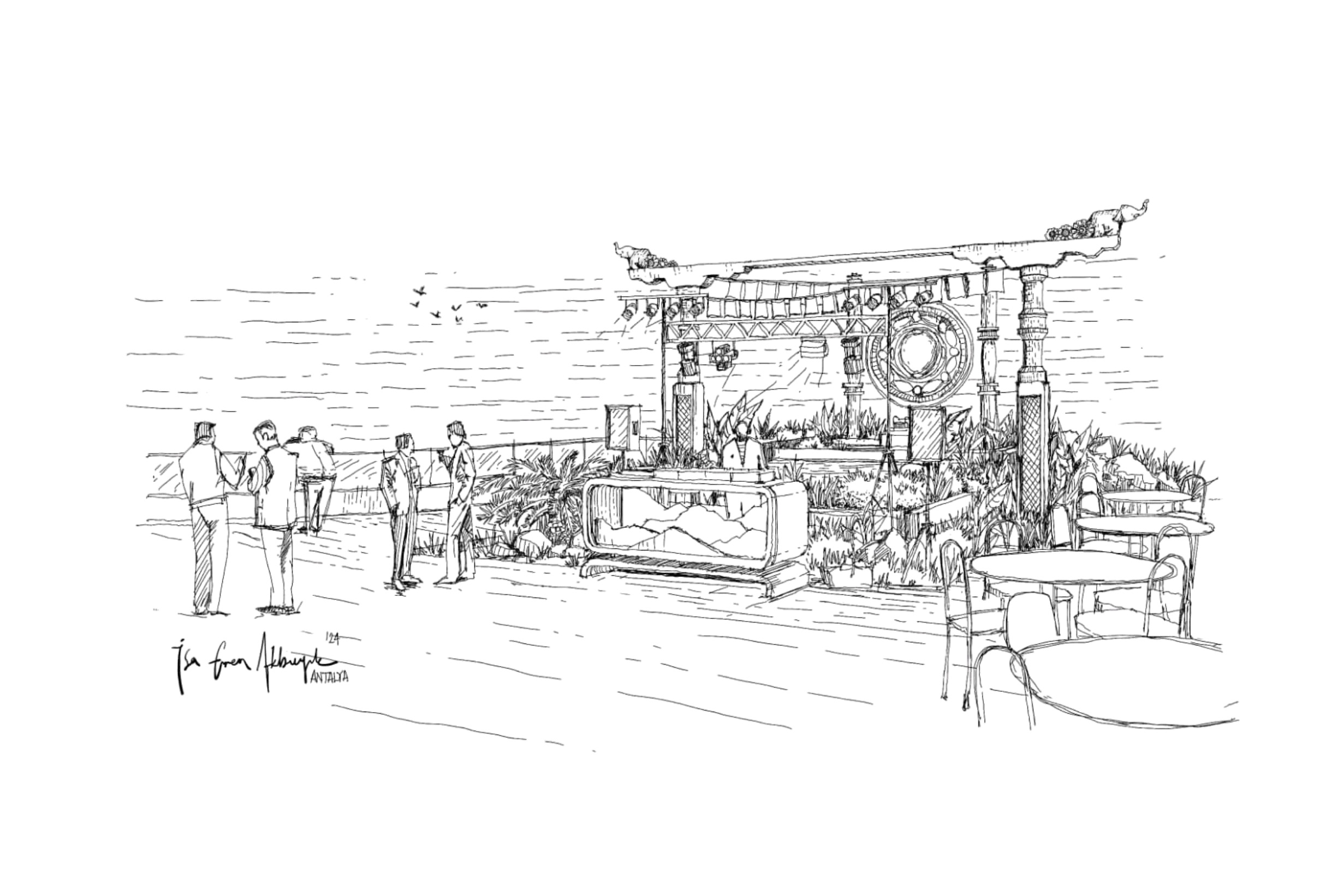
The hand is the instrument of knowing. A sketch is the difference between looking and seeing: everyone looks at a street, but whoever sits down to draw it is forced to see the bond of the stonework, the angle of the eaves’ shadow, the point where the street narrows and slows a person down. The pencil is slow; that slowness is thinking itself.
The traces of correction left on the paper are not dirt but evidence — evidence of where the decision was made. Overlapping lines in a sketch show that an edge was searched for three times. The third line is the right one; but without the first two it could never have been found. A clean sketch is an unconsidered sketch.
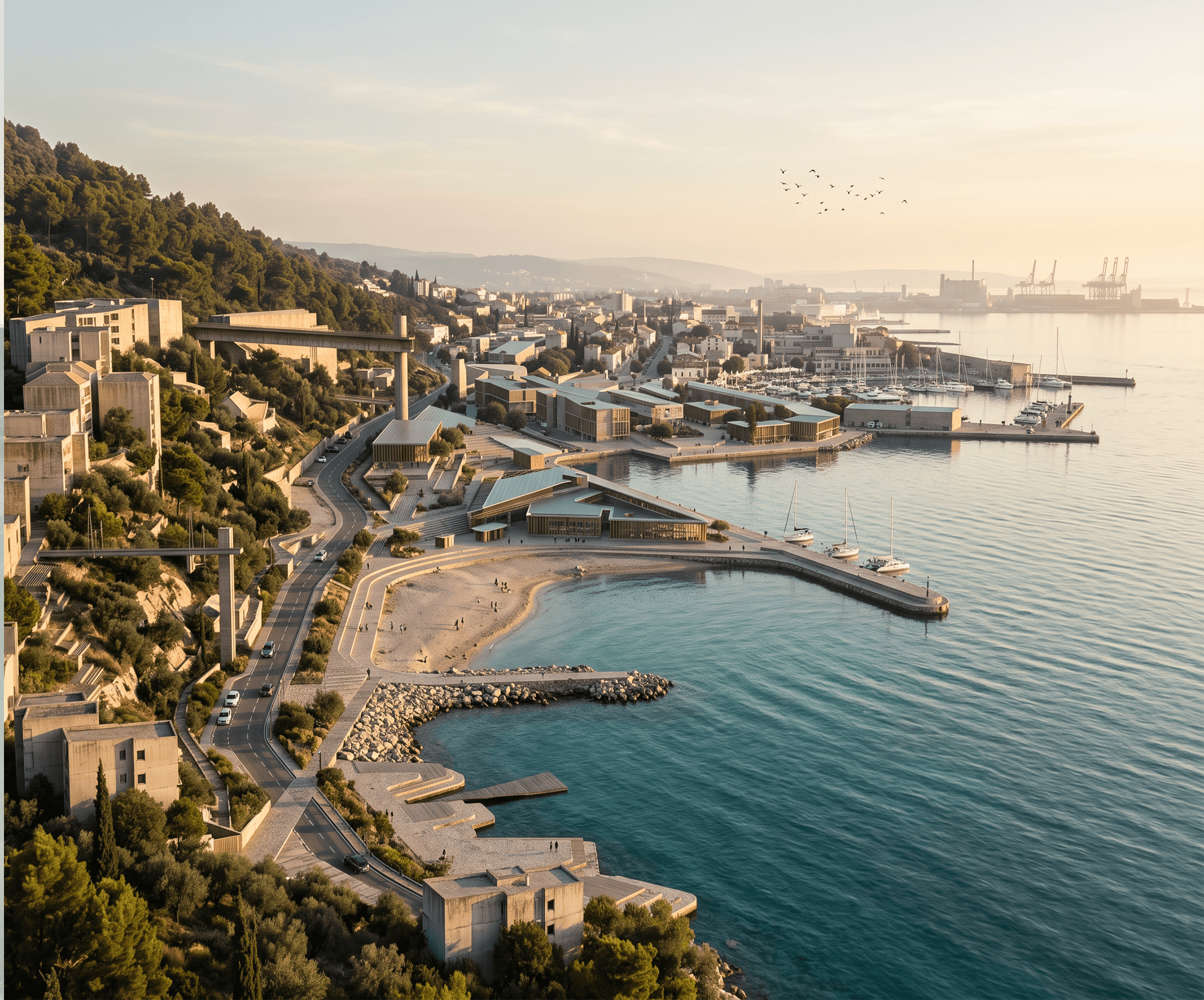
The machine, by contrast, is the instrument of seeing. An image produced with artificial intelligence does not appear in one go; the sketch is given to the machine, the machine comes back with dozens of proposals, and most are discarded. Some because they replaced the stone in the drawing with stone from another geography, some because they added a storey that does not exist, some simply because they were “beautiful.” Beauty alone is not the criterion; fidelity to the line is.
An image produced with artificial intelligence contains no new decision; it shows how a decision already made will look in, say, late afternoon light. The machine is fast; that speed widens the limits of imagining.
The division of labour is in fact clear: geometry, proportion and scale are the hand’s work, and they are not negotiable. What is left to the machine is material, light and atmosphere. When the machine reaches for form, it is stopped there. Because form is a promise given; atmosphere is how that promise is spoken.
This boundary does not always maintain itself automatically. The machine likes to speak where the line falls silent: it builds its own town on an empty hillside, places its own silhouette upon an ambiguous horizon. What it produces is often beautiful, even convincing; but it belongs neither to the machine, nor to the one who draws. This is why every output, once generated, must be re-compared against the sketch. And it is still the hand that makes the comparison, and accepts or rejects the result.
Perhaps the real point is this: the machine works best when the hand comes to it with knowledge. Commands from a hand that has not learned to see produce beautiful images belonging nowhere — the kind that stream past in their thousands online every day, resembling a place but being no place at all. The sketch of a hand that has learned to see, on the other hand, ties even what comes out of the machine to a real place. A sketch contains more than lines; it contains a world that has been looked at. The machine cannot produce that, but it can carry it.
A sketch does not always depict an existing place. At times, it is drawn purely from imagination, without referencing a single photograph or visiting any site. When such a drawing is fed into the machine, what emerges is astonishing: a scene that exists nowhere transforms into an image that appears genuinely captured. This reveals both the machine's power and its limitation at once. The machine can make even a non-existent world convincing; but that world must first have been invented by a hand. The height of the railing, the resting position of the rock, where the tree extends its branch—all of these are decided in the act of drawing. The machine invents none of them; it merely clothes them all.
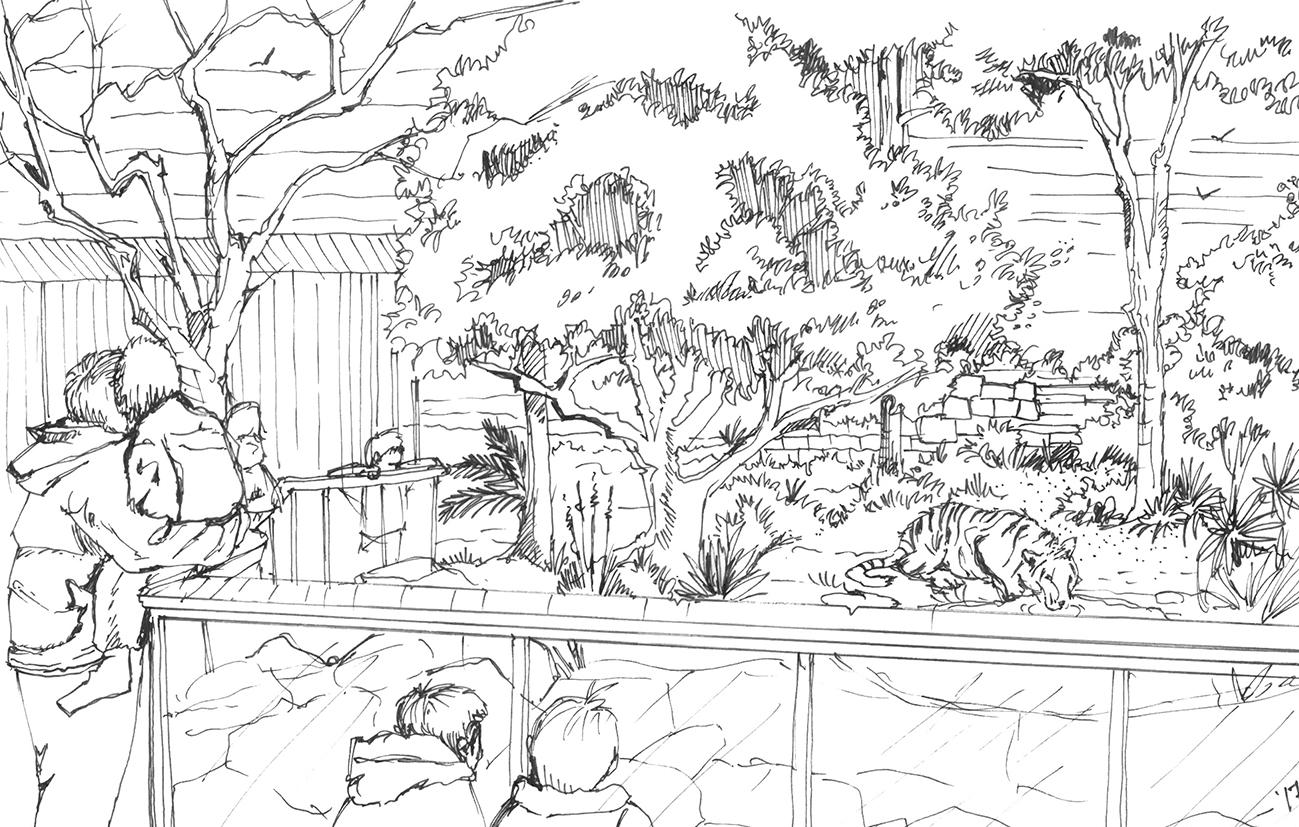
There is one more detail: imagination is not as free as it is thought to be. A railing drawn from imagination is the sum of real railings observed over the years. The hand cannot invent what it has never seen; it recombines what it has witnessed. Thus, imagining is also a form of remembering, and what fills that memory is years of observation. A sketchbook is not an archive, but muscle memory.
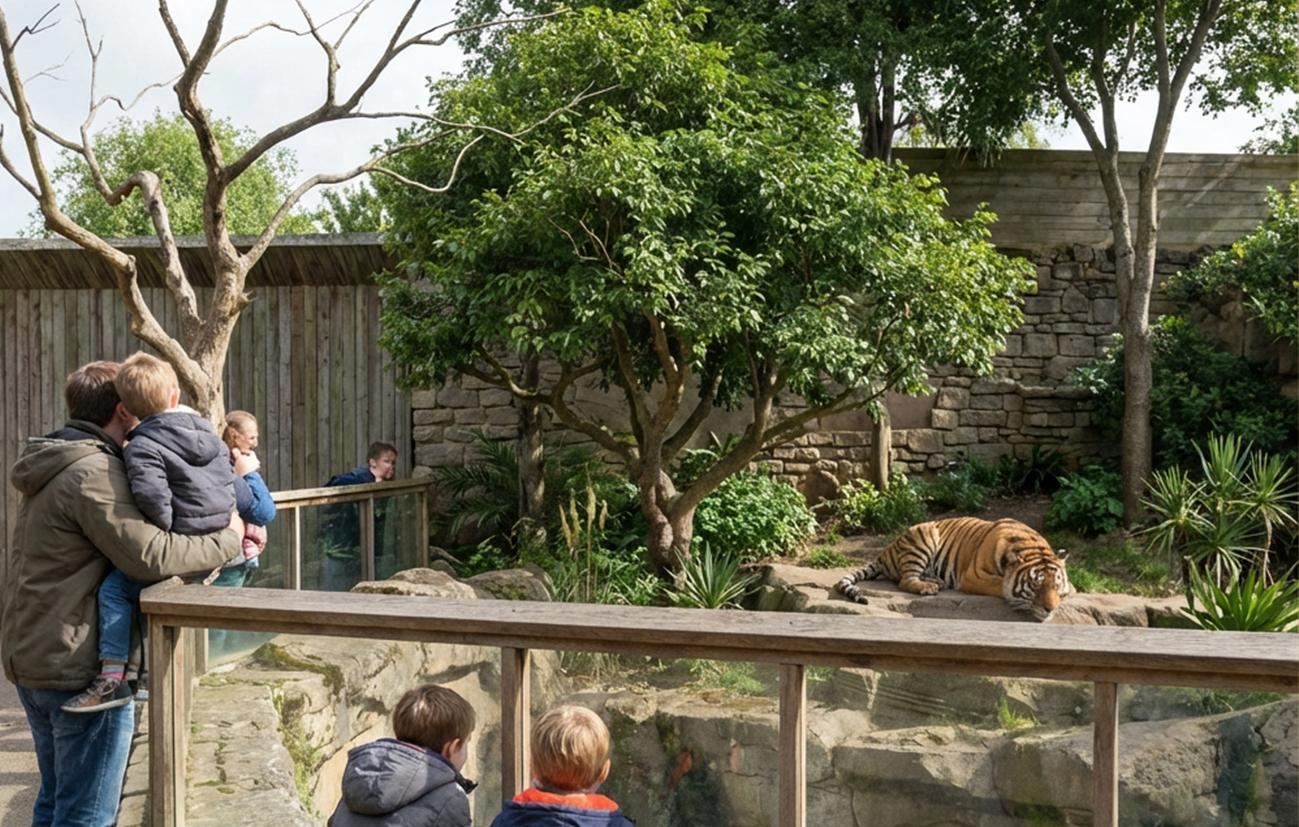
Therefore, the issue is not a competition of tools, but their sequence. First one observes, then draws, then clothes. When this order is broken, what emerges is not design, but an image; and an image, unless it belongs to a place, is forgotten no matter how brilliant it may be.
So, what should be said today to a student learning to draw is not “why draw when there are machines” but exactly the opposite: draw, because the machine can only serve a hand that draws. A person who does not know how to draw cannot know what to ask of the machine; whereas the person who draws can evaluate what the machine produces. The difference is that between being a user and being a designer.
We are at one of the most exciting thresholds in the history of our profession — we hold both a twenty-thousand-year-old tool and a two-year-old one, and we are the first generation to sit them down at the same table. The hand knows; the machine sees. Something greater than either will rise from that table.
"A hand that has not learned to see produces beauty that belongs nowhere."
read on
Related stories
Landscape Architecture in the Age of Artificial Intelligence through the Eyes of Burak Işık: Designing the Quality of Decisions, Not the Tools
While artificial intelligence tools rapidly integrating into landscape design processes offer new creative possibilities, professional judgment, technical data verification, and a culture of collaborative learning play more critical roles than ever. An insightful evaluation on a roadmap that bridges new technologies with professional expertise.
"The Silent Curriculum of Landscape" by Sude Akbal: Nature Literacy in Iğdır
Sude Akbal, a Landscape Architecture student at Ankara University, shares her insights on nature literacy and field experience from the TÜBİTAK 4004 Iğdır project in peyzajMAG.
Landscape Architect Serdar Kaleli on Designing Security: "The Invisible Power of Landscape Beyond High Walls"
Is security merely about high walls and barricades? Plant buffers, grade changes, and the concept of invisible protective landscape explored in full detail in peyzajMAG!
Hear about the next issue first
Leave your email and we will write when there is something new. We use it for nothing else.