Landscape Architecture in the Age of Artificial Intelligence through the Eyes of Burak Işık: Designing the Quality of Decisions, Not the Tools
While artificial intelligence tools rapidly integrating into landscape design processes offer new creative possibilities, professional judgment, technical data verification, and a culture of collaborative learning play more critical roles than ever. An insightful evaluation on a roadmap that bridges new technologies with professional expertise.
This story was originally published in Turkish. Read in Turkish
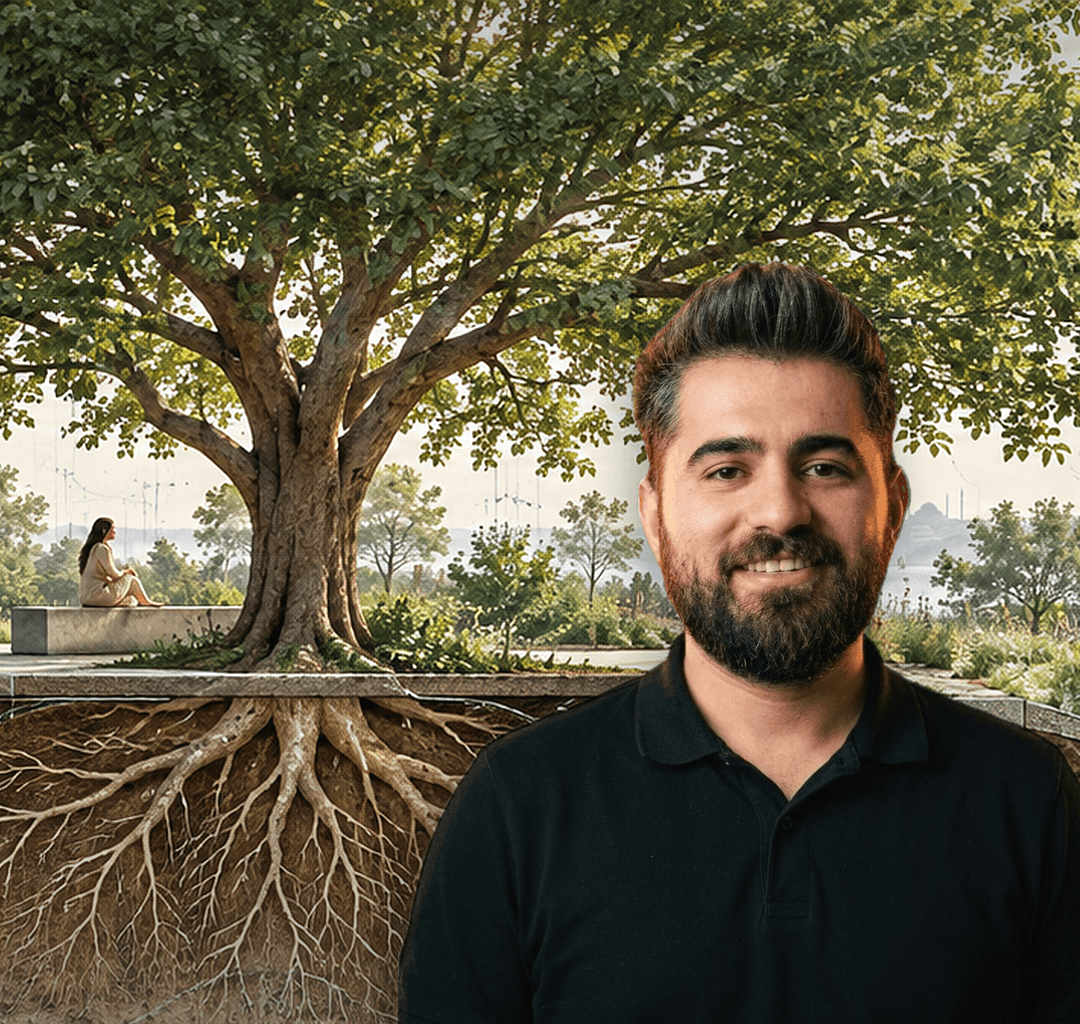
Who Will Design the Future of Landscape in the Age of Artificial Intelligence?
The accumulated knowledge of landscape architecture is strong enough to determine which questions new tools should solve. Now is the time to turn that knowledge into a new productive force.
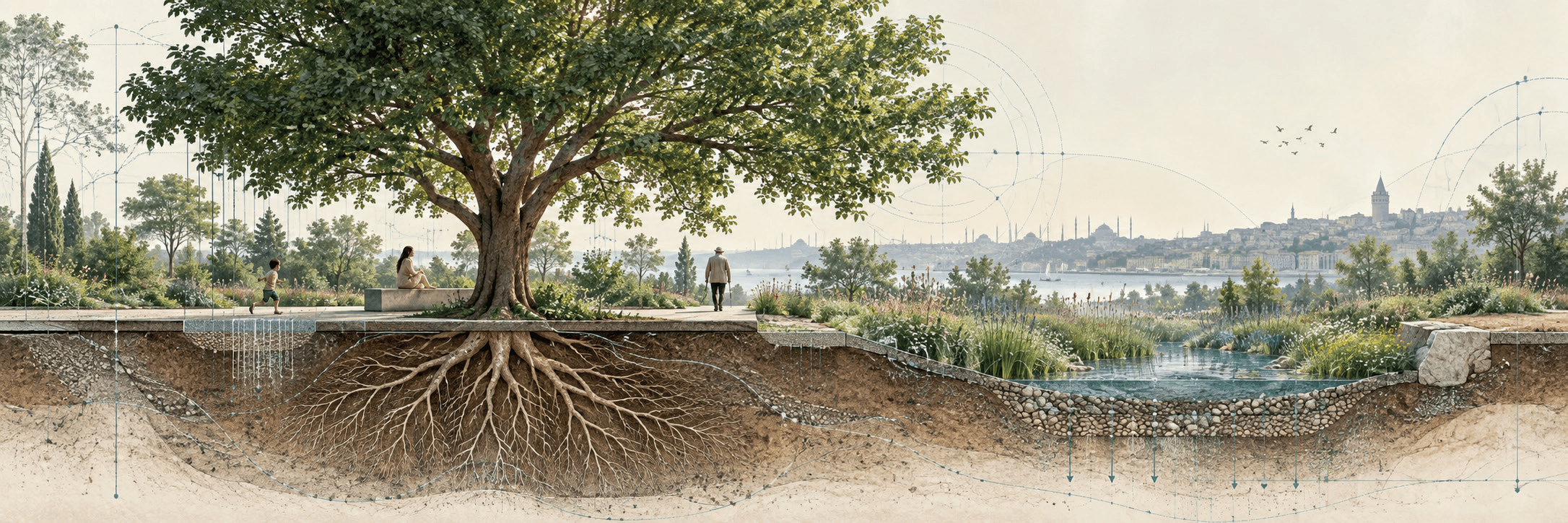
When we place a tree in a drawing, we also think about the shade it will cast twenty years from now, the water it will need and the soil its roots will find. When we design the paving of a square, a seating unit or a playground, we keep in mind the life that will unfold there over the years. Landscape architecture is a profession that works with the future. Now we need to design the future of our own way of working with the same care.
Our encounter with artificial intelligence often begins with an image: a garden born from a few sentences, a square that changes in an instant, a persuasive photograph of a life that has not yet been built. This capacity for production is exciting. But for our profession, the greater opportunity lies before and after that image. How will we read the site? Which options will we consider? How will we discuss the consequences of our decisions over the years?
As a landscape architect, I believe we need to take part in this change. The tools we use affect which options we are able to see and which questions we can devote time to. When our professional knowledge contributes to the development of these tools, our relationship with technology grows stronger too. The first step is to clearly define which problem in our own work is worth solving.
Let us shape the future that artificial intelligence will serve with our professional expertise.
The space opened up by speed
Let’s take a neighbourhood square. Hardscape materials and paving patterns, the layout of play areas, shade structures, rest areas and landscape furniture all need to be considered together. Design begins with listening to users and observing the site. With AI-assisted tools, we can visualise different materials and patterns and open layout ideas up for discussion. Evaluating these options in terms of accessibility, maintenance and user needs, however, is our job.
The value of this support depends on how we use the time it saves. If we can devote time to rethinking the position of a bench, improving the relationship between the play area and the rest area, or discussing material options with users, speed becomes a professional gain. Alongside delivery time, we should also count the quality of the decision as a measure of success.
We can also develop small digital tools tailored to our own needs. An office archive that makes plant observations, maintenance experience with paving materials and furniture details searchable could be a starting point. In this way, accumulated experience feeds both new decisions and the systems we use.
Standing behind the decision
This new productive power calls for a habit of careful evaluation. We should examine a proposed plant list against local climate and maintenance conditions, and a hardscape material against slip resistance, durability and installation conditions. A playground that looks appealing in a rendering is not proof of a safe and accessible solution. Seeking sources, verifying technical data and, when necessary, rejecting a proposal should be part of our working process.
Not every AI tool does the same job. A pergola proposed by an image-generating model does not, on its own, prove its shade performance at different times of day. That requires a separate analysis based on location, date, time and geometry. We build trustworthy work to the extent that we can explain which information, method and assumptions an output is based on.
The American Society of Landscape Architects’ (ASLA) 2025 policy on artificial intelligence also emphasizes the importance of professional judgement and responsibility. [1] For us, what this means day to day is clear: explaining the method we use, verifying results and standing behind our decisions. The confidentiality of project data, the usage rights of images and the environmental footprint of the technology should also be part of this evaluation.
A profession that learns together
The strengthening of the profession depends on these skills becoming widespread. Rather than a method learned in one office being rediscovered in another, or the same mistake being repeated by different teams, we can create settings in which we share experience. Where did we gain a benefit? Where did we get a wrong result? What did we check to correct it? When we can also talk about failed attempts, our collective knowledge grows.
At universities, we can add data literacy and the questioning of results alongside teaching software commands. In offices, we can run small, clearly bounded trials and record their effects. Our professional organisations can increase access to training and bring together examples grounded in local conditions. Such accumulated knowledge also enables us to explain our needs more clearly to developers and to have a say in how the tools are designed.
We don’t have to wait until we have learned every tool to begin. Each of us can pick a repetitive task, run a small trial and compare the result with our current method. Recording the gains, the errors and the need for checks, and then sharing the experience with a colleague, is a concrete start. What matters is making learning a continuous part of working life.
Our ambition to design the future of landscape requires us to invest in the future of our own profession as well. Let us bring to our working culture the same care we show when thinking about how a tree will grow or how a square will be used over the years. Let us learn, test and develop new tools. And in deciding which future artificial intelligence will serve, let us speak up with our professional knowledge, our courage and our power to create together.
[1] ASLA, Artificial Intelligence, 2025. Professional responsibility and artificial intelligence policy.
About the author
Burak Işık / Landscape architect. He works on architectural visualisation and AI-assisted production.
Instagram: @withburaki
read on
Related stories
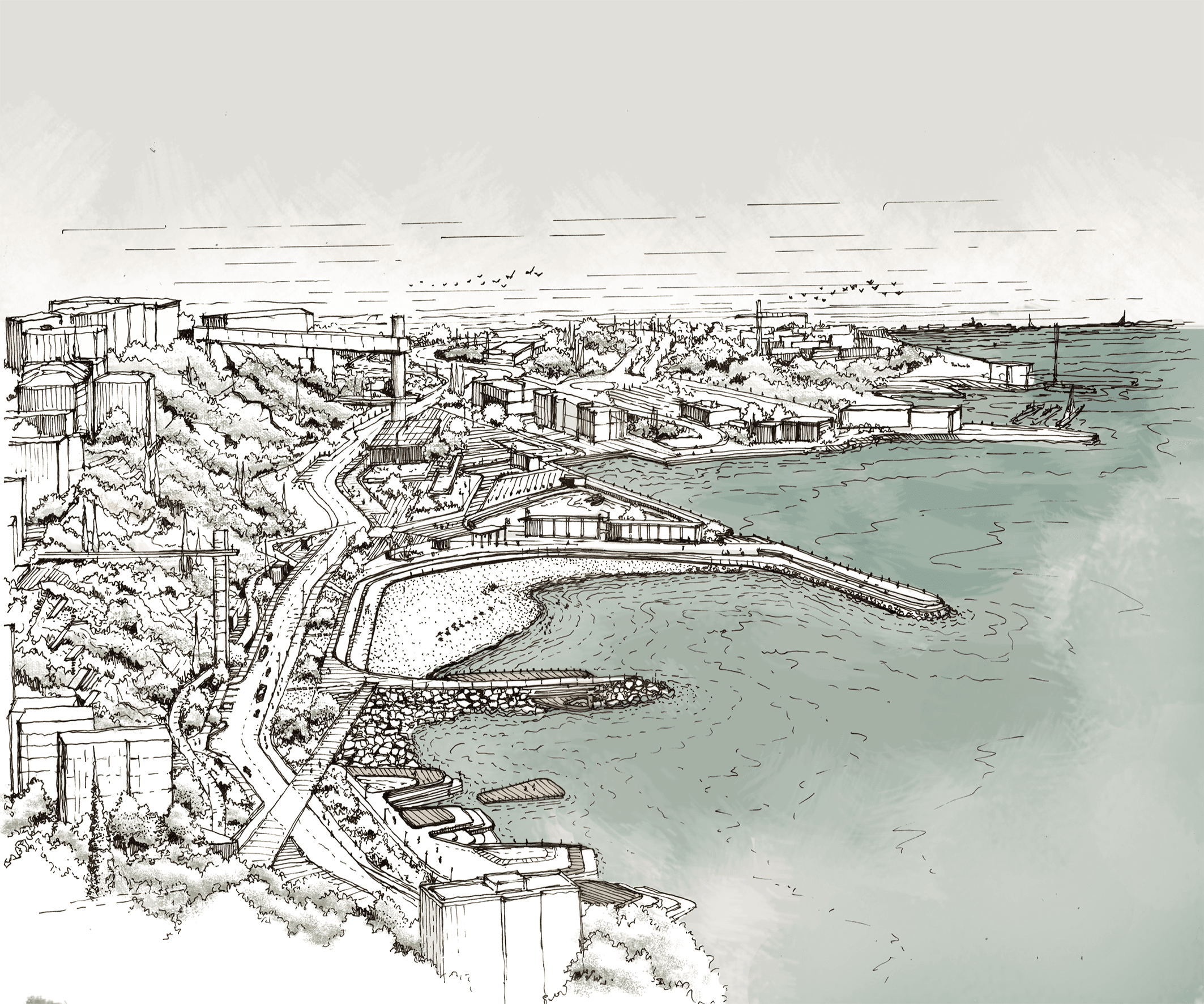
"What the Hand Knows, What the Machine Sees" by İsa Eren Akbıyık: Sketching and Artificial Intelligence
Landscape Architect İsa Eren Akbıyık writes for peyzajMAG about a new design practice that brings together the depth of hand sketching and the vision of artificial intelligence.
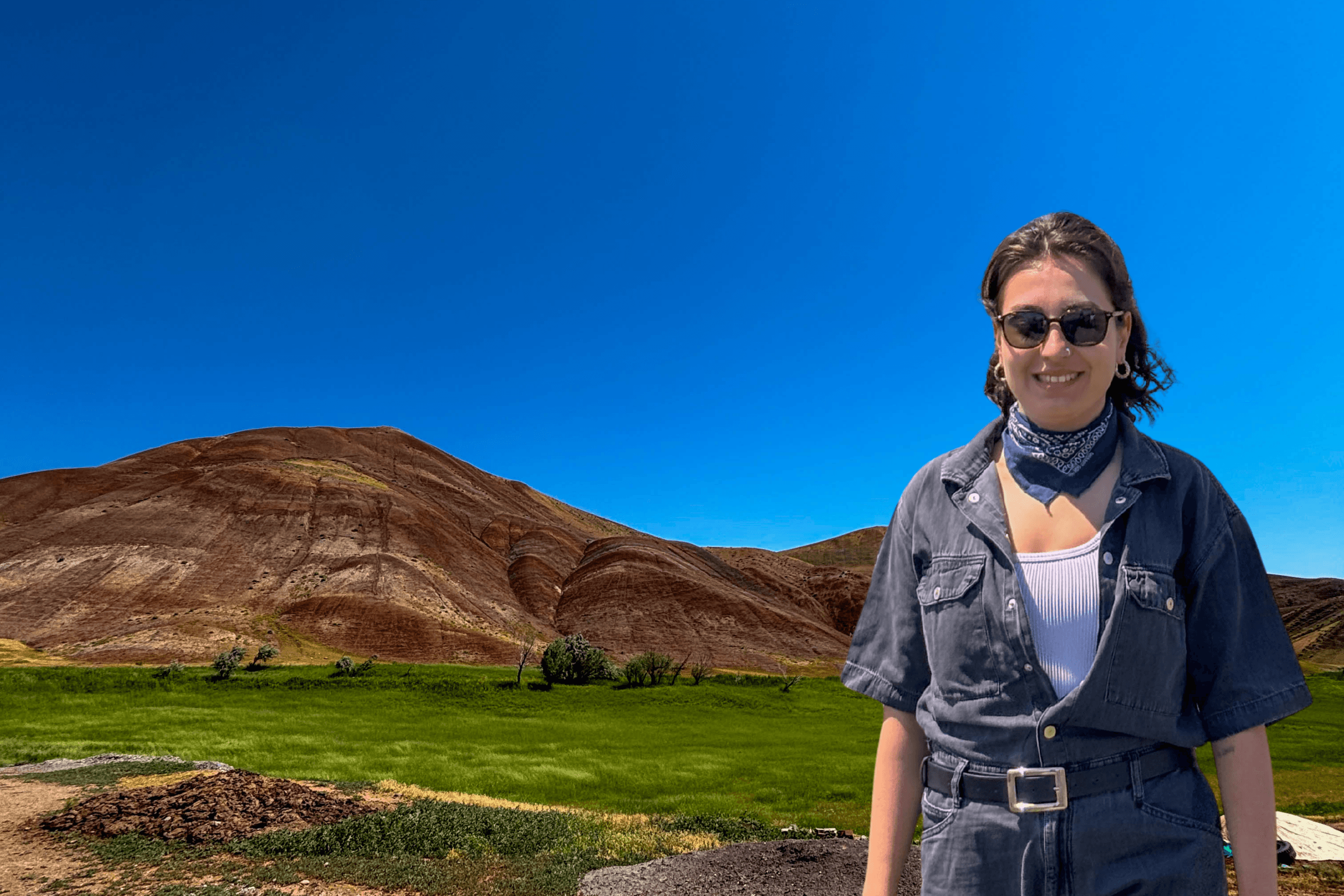
"The Silent Curriculum of Landscape" by Sude Akbal: Nature Literacy in Iğdır
Sude Akbal, a Landscape Architecture student at Ankara University, shares her insights on nature literacy and field experience from the TÜBİTAK 4004 Iğdır project in peyzajMAG.
Landscape Architect Serdar Kaleli on Designing Security: "The Invisible Power of Landscape Beyond High Walls"
Is security merely about high walls and barricades? Plant buffers, grade changes, and the concept of invisible protective landscape explored in full detail in peyzajMAG!
Hear about the next issue first
Leave your email and we will write when there is something new. We use it for nothing else.