Projective Landscapes: Academia, Public Sector, and Industry Meet at the 9th National Landscape Architecture Congress
Taking place on November 20–22, 2026, the 9th National Landscape Architecture Congress brings academia and industry together under the theme "Projective Landscapes." Organized by the UCTEA Chamber of Landscape Architects and bringing the public sector into the dialogue, the congress invites industry professionals to share their hands-on field experiences.
This story was originally published in Turkish. Read in Turkish
Traditionally, professional congresses are designed as platforms where academic knowledge is presented to the community. However, it is a well-known reality that knowledge is not generated exclusively within universities; theories confined purely to academia can at times become disconnected from the real needs of the everyday city and the field. Aware of these dynamics, the UCTEA Chamber of Landscape Architects invites not only academics, but also industry professionals—who generate knowledge, cultivate vision, and implement projects on the ground—to share their experiences at the 9th National Landscape Architecture Congress, centered on the theme "Projective Landscapes" from November 20–22, 2026, at Istanbul Medipol University Kavacık South Campus.
Intersecting Axes of Theoretical and Practical Knowledge
The congress opens the theme of "Projective Landscapes" to debate across four core axes of action: producing, commoning, transforming, and processing. Through these axes, the aim is to reconfigure space, build a shared living environment that encompasses all living beings, reshape spatial processes in the face of contemporary crises, and reveal the hidden layers of space. In doing so, practical field experience meets academia’s analytical rigor on a single, shared platform.
A Platform for Value-Creating Designers and Firms
This inclusive framework presents a vital opportunity for landscape architecture practices and implementation firms that generate high-caliber knowledge and value within the sector. Projects and vision—often developed on-site with idealist ambition but left under-appreciated due to lack of suitable presentation channels—will meet an audience actively attuned to listening and engaging. Moreover, abstracts submitted by industry representatives will undergo evaluation by an academic peer-review panel, ensuring that professional practice is scientifically endorsed across the triad of chamber, academia, and industry.
Bringing Together the Four Key Stakeholders
A pivotal factor elevating the strategic importance of the congress is the main sponsorship of the Union of Municipalities of Türkiye (TBB). With TBB engaging both as panelists and participants, the fourth and largest pillar of the profession—the public sector—is directly integrated into the dialogue. Simultaneous discussions among all stakeholders (chamber, academia, private sector, and public sector) lay the foundation for a holistic, actionable vision for landscape architecture practice across Türkiye.
Ensuring that professional practice is not trapped strictly between the office and the jobsite, and that industry-generated knowledge is systematically documented and debated, marks a critical threshold for the advancement of landscape architecture. As peyzajMAG, we view this "field-facing" format of the 9th National Landscape Architecture Congress as a deeply valuable initiative to break professional isolation.
Engaging in this collaborative environment where public, academic, and private sectors meet—whether by presenting a paper or simply attending—is essential for staying ahead of contemporary approaches. Every brick laid toward the intellectual and structural development of the profession ultimately constructs new pathways that elevate the quality of our own daily practice.
To submit an abstract to the 9th National Landscape Architecture Congress, visit their official website:
read on
Related stories
Landscape Architecture in the Age of Artificial Intelligence through the Eyes of Burak Işık: Designing the Quality of Decisions, Not the Tools
While artificial intelligence tools rapidly integrating into landscape design processes offer new creative possibilities, professional judgment, technical data verification, and a culture of collaborative learning play more critical roles than ever. An insightful evaluation on a roadmap that bridges new technologies with professional expertise.
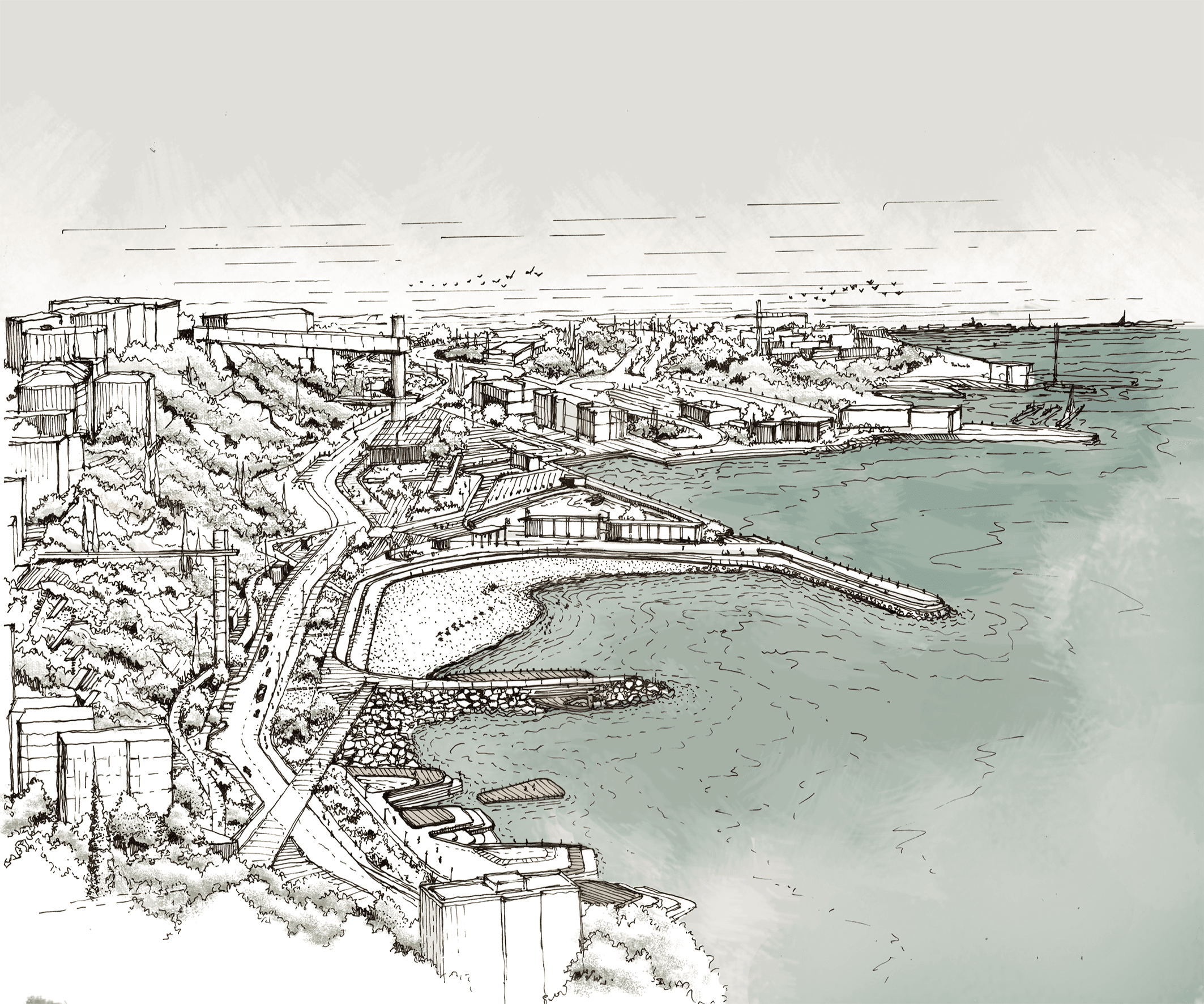
"What the Hand Knows, What the Machine Sees" by İsa Eren Akbıyık: Sketching and Artificial Intelligence
Landscape Architect İsa Eren Akbıyık writes for peyzajMAG about a new design practice that brings together the depth of hand sketching and the vision of artificial intelligence.
"The Silent Curriculum of Landscape" by Sude Akbal: Nature Literacy in Iğdır
Sude Akbal, a Landscape Architecture student at Ankara University, shares her insights on nature literacy and field experience from the TÜBİTAK 4004 Iğdır project in peyzajMAG.
Hear about the next issue first
Leave your email and we will write when there is something new. We use it for nothing else.