From Organization to Communication: An Interview with President Özay Yerlikaya
We spoke with Özay Yerlikaya, President of the UCTEA Chamber of Landscape Architects, about the profession's organizational culture, communication strategy, and struggle for rights.
This story was originally published in Turkish. Read in Turkish
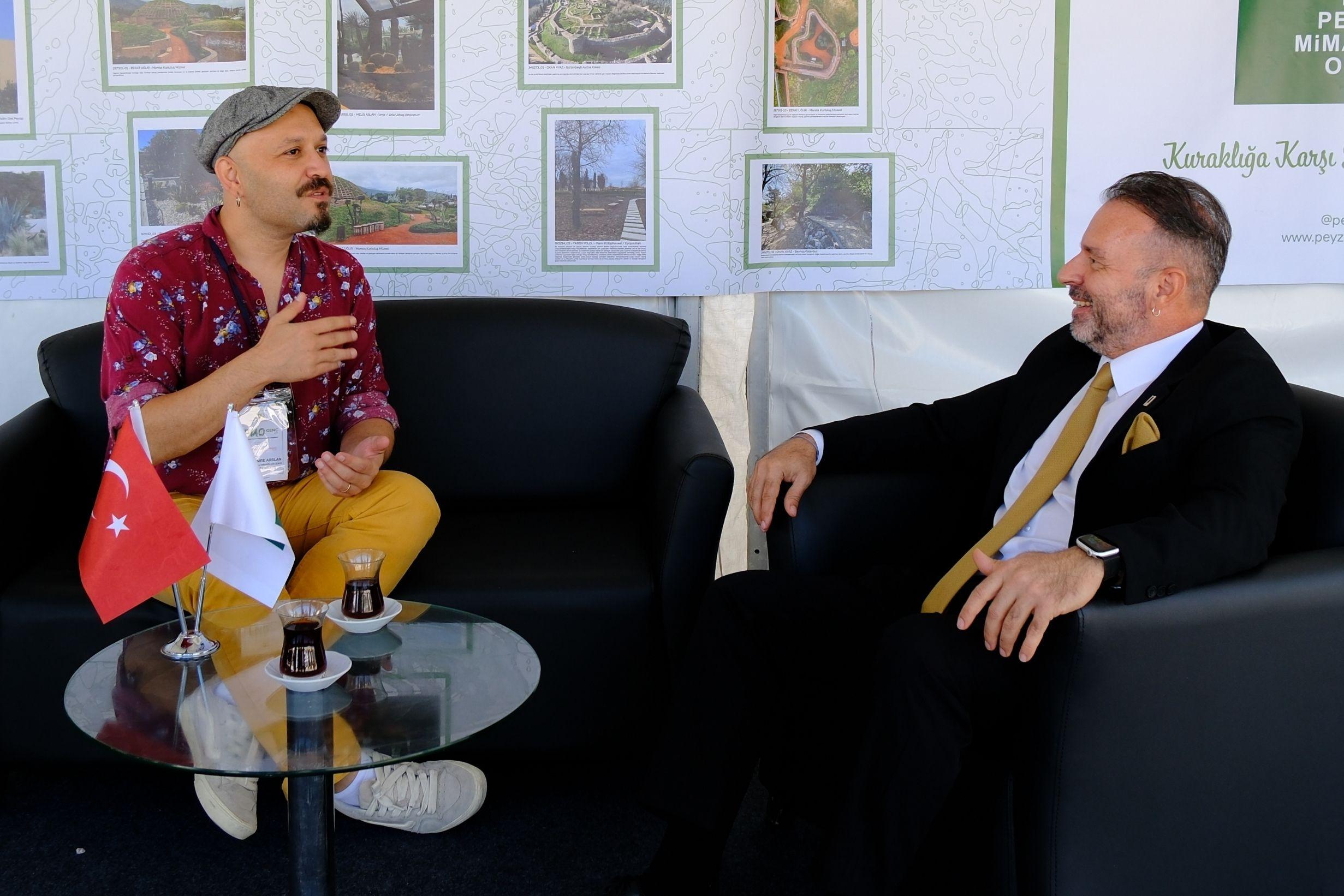
Mr. Yerlikaya, everyone in the professional community knows you through your leadership roles in the Chamber: years as President of the Chamber of Landscape Architects İzmir Branch, followed by your terms as Secretary General and President at the headquarters.
But those who know you well also know that, alongside chairing clubs and councils as a student, you hosted a radio program, spent a long stretch in the early 2000s as a manager in marketing and human resources, completed the Human Resources Management Program at METU (ODTÜ), and produced the program Benim Küçük Bahçem (My Little Garden) for TRT.
I would like to talk with you about this communicator and organizer side of you.
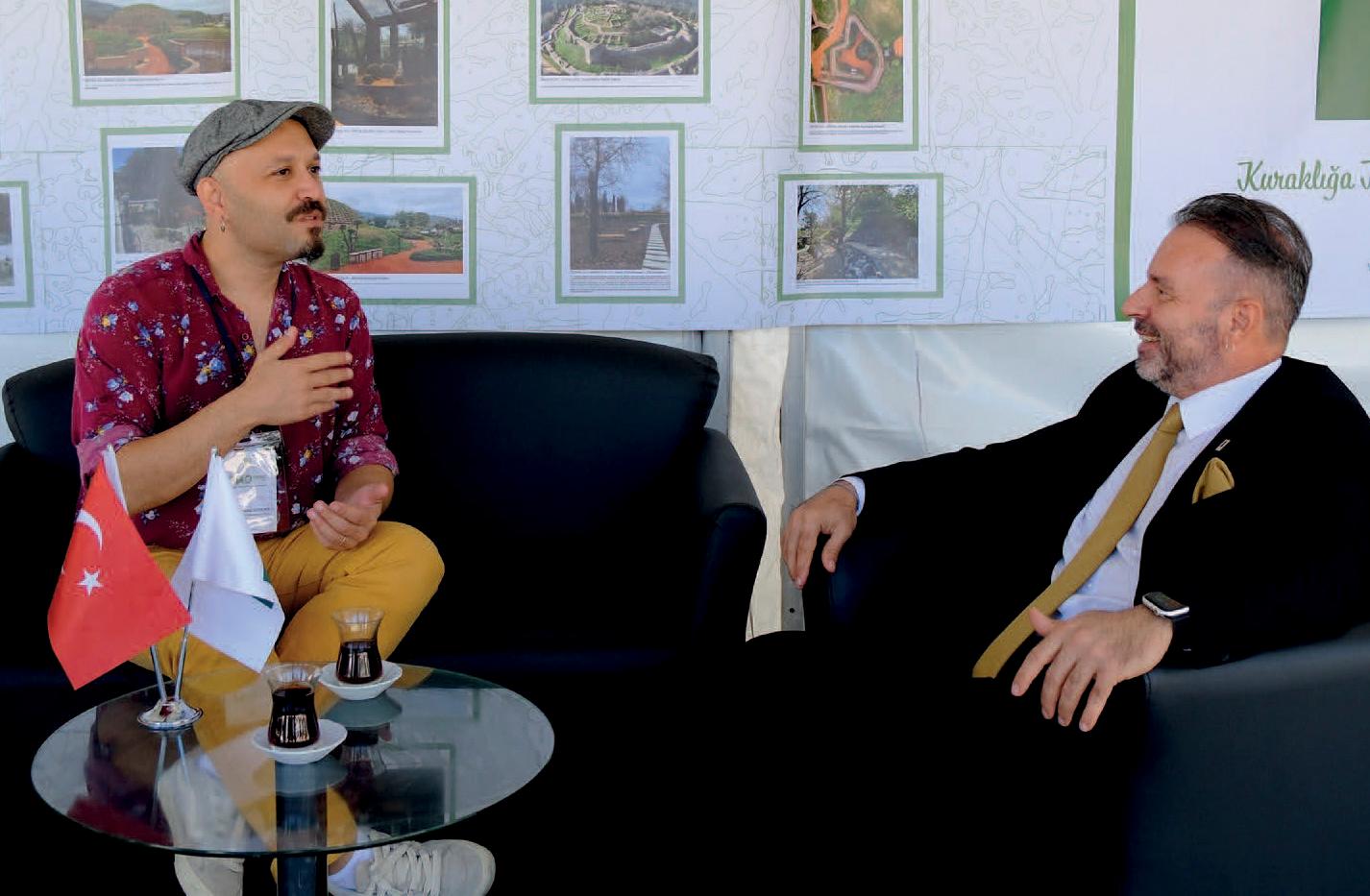
What is the relationship between communication and landscape architecture? Are communication skills necessary for professional development?
I believe that being sociable has to come, to some extent, from within. Because being social is not as easy as it looks from the outside; it demands real dedication, time, engagement with people, and a willingness to take on responsibility.
During my university years, I was never a student who simply went to class and went home. Producing something, getting things done, contributing to the community I was part of and, if possible, leaving a mark were much higher priorities for me. I think that is where the foundations of my communicator side were laid.
Landscape architecture is also a profession in which communication has to be very strong. Because we are not just designing a site. We are bringing together a place, the people who will live there, nature, ecology, the city, and different professional disciplines. Being able to explain why a design is necessary, persuade different stakeholders, and bring them onto common ground is just as important as the quality of the design itself.
What is more, the scope of landscape architecture today has to be viewed within a much broader framework. Issues such as climate change, the water crisis, disasters, wildfires, biodiversity, and urban resilience are no longer topics discussed only within our professional circles. They need to be translated into a language society can understand, explained to decision-makers, and used to bring different groups together around the same issue.
So for me, communication is not a separate skill that stands alongside landscape architecture. It is one of the fundamental tools for conveying professional knowledge to society, building collective wisdom, and strengthening the profession’s place in decision-making processes.
As a multifaceted person, you surely look at the profession from different angles. What does landscape architecture look like from where you stand?
I have never seen landscape architecture as merely a profession that designs gardens. Perhaps the experiences I had before starting university and in my first years there played an important part in that.
In my very first year of university, I was serving as a Council Member for Environmental Issues within the Konak Municipality Young Municipal Leaders structure. At the same time, my dear professor Ümit Erdem was trying to draw me into the Chamber’s activities from my first year onward. I was concerned with environmental problems, thinking about the city, and taking part in various youth organizations.
In fact, meeting Professor Ümit Erdem before I entered the landscape architecture department, at an event we organized within Konak Municipality, and encountering his perspectives were very influential in my later choosing landscape architecture.
In those years, crises and actual disasters on the scale we experience today were not so frequently visible. But there were experts who said these would happen in the world’s future, and as young people we were influenced by those forecasts. Even back then, I believed that environmental problems would become far more decisive in the future.
Looking back today, I see landscape architecture as a profession that builds the relationship between people and nature, city and ecology, design and life.
For example, years ago, in some programs I took part in, I was saying that by around 2025 a large part of Türkiye could face physical water scarcity. 2025 came so fast that, right at that time, we were confronted with a very serious water crisis that hit us all in the face.
“That is why, from my perspective, landscape architecture is a profession that goes far beyond aesthetic concerns; it bears the responsibility of building the cities, living spaces, and ecological systems of the future.”
Has being a communicator contributed to your career in landscape architecture? And likewise, has being a landscape architect influenced the way you communicate?
I definitely think these are two fields that feed each other.
In my first year of university, while I was also serving on the Environmental Issues Council within the Konak Municipality Young Municipal Leaders structure, I received an offer from Batı Radyo to host a program on environmental issues. It was a very exciting experience.
We prepared and presented the program together with one of the station’s broadcasters. We named it “Yeşil Çember Mavi Çizgi” (Green Circle, Blue Line) and ran it one day a week for about a year.
Researching environmental problems and trying to explain them to people while I was still at the very beginning of my student years led me to follow the concrete problems unfolding around the world much more closely. The more I learned about a subject, the more I cared about it, and the more I cared, the more responsible I felt.
And there was a natural continuation of this: sharing something you know with others and helping them become aware of it too.
So that program did not just teach me how to speak into a microphone. It taught me how to understand a subject, research it, simplify it, and translate it into a language the person in front of me could understand. I also saw that communication becomes a far more powerful tool when it is combined with a sense of responsibility.
Later, becoming a landscape architect changed the way I communicate as well. What I was talking about was no longer just general environmental problems, but subjects within my area of expertise, grounded in scientific and technical knowledge.
The same holds true today. As landscape architects, if we talk about what we know only within our own professional circles, we cannot increase the profession’s standing in society. Knowledge needs to be translated into a language that society can understand.
Did these communication skills also influence your career in the Chamber?
Of course. But I view the phrase “career in the Chamber” a little differently. I have never regarded leadership in the Chamber as a career.
For me, it is a sense of belonging and of contributing that began with serving on a commission in the Chamber and continued through different responsibilities such as Branch Boards, Branch President, Secretary General, Vice President, and President. Your duties and responsibilities change, but your enthusiasm for contributing to your profession does not. Whatever I feel today as President, I essentially felt the same thing when I served as a commission member, when I was Branch President, and when I was Secretary General: the excitement of being able to do something for my profession, to contribute to where I am, and to be part of it.
An important aspect of this is that leadership in the Chamber is based on volunteering. Everyone serving at every level of management in the Chamber of Landscape Architects devotes effort to the professional organization by sacrificing time from their work, their families, their private lives, and their own time. So work in the Chamber is essentially voluntary work built largely on the time people set aside from their own lives and the dedication they show.
Sometimes we see that this is not sufficiently understood, and is even frowned upon by some people. Yet at the heart of a professional organization’s ability to survive lies the voluntarism of people who put their time and effort into their profession. Without it, chambers would be nothing more than empty spaces.
The social and organizing side of me that began in my university years carried on in the same way in my work with the Chamber.
I was elected Youth Club President within YKM’s youth organization, which was quite large at the time. Later this responsibility expanded, and I took charge of all the clubs until I finished university. Working with very different kinds of people and an intensive program of events gave me valuable experience.
My theatre experience also made a small but valuable contribution. For one season I played small roles in the production “A Fantasy on The Phantom of the Opera.” Working alongside professional artists and seeing their perspectives, discipline, and working culture was instructive for me.
All of this later resurfaced in different forms during my leadership in the Chamber.
Because running a professional organization is not just about making decisions. You need to listen to members, understand different views, build relationships with institutions, explain to the public why an issue matters when necessary, and protect the common interests of the profession while doing all of this.
That is how I see communication today as President, too.
“Communication is not just about speaking well or making a good statement; it is about listening, understanding, establishing the right ground, and bringing people together around a common goal.”
You have more than 15 years of leadership experience in the Chamber of Landscape Architects, and during that time, alongside professional activities, you have in fact also managed communication with members, institutions, and organizations. What was that process like?
It was not an easy process, but it was a very instructive one professionally.
When you run a professional organization, you face very different expectations at the same time. On one side are your members, with their day-to-day professional problems, economic concerns, and demands for their rights. On the other side are public institutions, local governments, universities, other professional organizations, and decision-makers.
While communicating with all of them, you have to protect the Chamber’s own stance and the long-term interests of the profession.
One of the things that concerns me most here is where our profession stands today. Landscape architecture has a history of more than 50 years in our country. The Chamber of Landscape Architects is also celebrating its 32nd anniversary this year. Even so, it is of course disheartening that the most fundamental responsibilities of landscape architecture, above all project responsibility, have still not been fully recognized in practice and in legislation, and that the employment and institutional structures our profession requires within public institutions have still not reached an adequate level.
I believe these issues must now be resolved without further delay.
Because today we no longer define the responsibility of landscape architecture solely in terms of aesthetic environmental landscaping. We have a very broad area of responsibility, from water management to disaster risk, from climate change to ecological restoration, from public spaces to urban resilience.
Therefore, the authority and responsibilities of the profession also need to be defined in a way that matches this reality.
Another important issue is the quality of the communication you establish with institutions. I distinguish between short-term results and long-term gains. Sometimes it may seem easy to cut off a relationship with an institution entirely because of a disagreement you are having with it today. But tomorrow you may need to sit down at the table with that same institution again for the sake of the profession’s future.
That is why, in communication, I place importance on not closing doors completely, not taking problems personally, and establishing an institutional footing as much as possible.
This does not mean compromising on every issue. On the contrary, you need to be very clear about the rights and responsibilities of the profession. But being clear is not the same as closing channels of communication.
Not only in our profession but in almost all other chambers, members expect direct benefits. How does a communication framework built with decision-making authorities through solid, steady steps compare with short-term gains? What kind of work are you carrying out on this as a Chamber?
Providing direct benefits to members is, of course, one of the core responsibilities of a professional organization. But if you only try to respond to today’s problems, you actually leave unfinished the task of protecting the profession’s future.
I believe professional organizations also have a responsibility, in a sense, to build the future.
For example, the communication we establish with a municipality today is not limited to getting landscape architects more roles in one of that municipality’s departments or projects. If we can strengthen the place of landscape architecture in decision-making processes there, it will benefit the entire profession in the long run.
That is why we evaluate the communication framework we build with institutions beyond short-term gains.
Today, as a Chamber, we are trying to build stronger relationships with local governments, the central administration, universities, and other professional organizations. Because the problems of the coming period are not ones that a single institution or a single professional discipline can solve.
We have to work together on issues such as the water crisis, climate change, disasters, wildfires, and urban resilience.
So for me, communication is not just a tool for the Chamber to present itself to the outside world; it is a strategic tool that strengthens the profession’s place in decision-making mechanisms.
And perhaps the most important point: our profession is perceived as one that merely builds villa gardens, designs municipal parks, and plants flowers on road medians. What strategy should be pursued to break this perception?
I think we first need to start with how we present ourselves.
If we describe landscape architecture only through the visible face of the work we do, we should not be too surprised that society perceives us only in that way.
We design a park, but we do not sufficiently explain how that park affects temperatures in the city, how it manages rainwater, how it contributes to biodiversity, or how it influences people’s social lives.
We work on a stream, but we need to explain that this is not just a landscaping job, and what it means in terms of flood management, ecological corridors, public space, and urban identity.
We rework a site after a wildfire, but we need to show that this is not just about planting trees, and set out its connection to ecological restoration, resilient landscapes, and reducing future risks.
So it is no longer enough to say simply that “landscape architecture is important.” We need to explain for whom and why it is important.
I think what is needed here is much more targeted communication and PR work.
We need to tell citizens: how can a landscape architect make your life more comfortable, healthier, and safer?
We need to tell decision-makers: when a landscape architect is employed in an institution, how does the quality of the decisions taken change, and what benefit does this bring to the city, to public resources, and to society?
And we need to tell the construction sector and contractors: how does a properly prepared and properly implemented landscape project increase the comfort, user satisfaction, and value of the living spaces you produce?
In other words, our communication strategy should be built not just on describing the profession, but on showing the tangible value that landscape architecture creates in the lives of every segment of society.
In fact, I have experienced this before. The program “Benim Küçük Bahçem” (My Little Garden), which I produced for TRT, was a good example. The program was made for TRT Çocuk, and over 13 episodes I carried out the designs and implementations in different spaces myself. Our aim was to show that, whatever the size of a space, livable places can be created by first correctly identifying needs and then applying the right design and the right implementation. The program was later broadcast on various TRT channels for many years.
This experience showed me how important it is to translate expert knowledge into a language that society can understand.
In fact, what we need as a profession today is to do this on a much larger scale.
Moreover, this is not an issue unique to Türkiye. In the United States, even though landscape architecture has a professional history of well over a century, the profession’s standing in society was made more visible through strong, high-budget communication and PR campaigns, especially during the pandemic. After the pandemic, this had positive effects on the profession and on the working lives of practitioners.
In a similar way, we need to see professional communication and PR work as part of the profession’s future.
Because our profession has a history of more than 50 years in our country, and our Chamber is 32 years old. If, despite this, we still have to explain the most fundamental responsibilities of landscape architecture, its project responsibility, its employment in public institutions, and its place in decision-making processes, then we must speak not only of shortcomings in legislation or practice, but also of a shortcoming in communication.
I believe landscape architecture will come to occupy a much more central position in the future. But for that to happen, it is not enough for us simply to demand our rights.
We have to show people what a landscape architect adds to their lives, show decision-makers what a landscape architect adds to the city, and show investors and the construction sector what landscape design adds to the living spaces they produce.
I think this is exactly where the core communication strategy that will change the profession’s image in society begins.
To explain landscape architecture, it is not enough to talk only about landscape architecture; we need to show what landscape architecture changes in people’s lives.
read on
Related stories
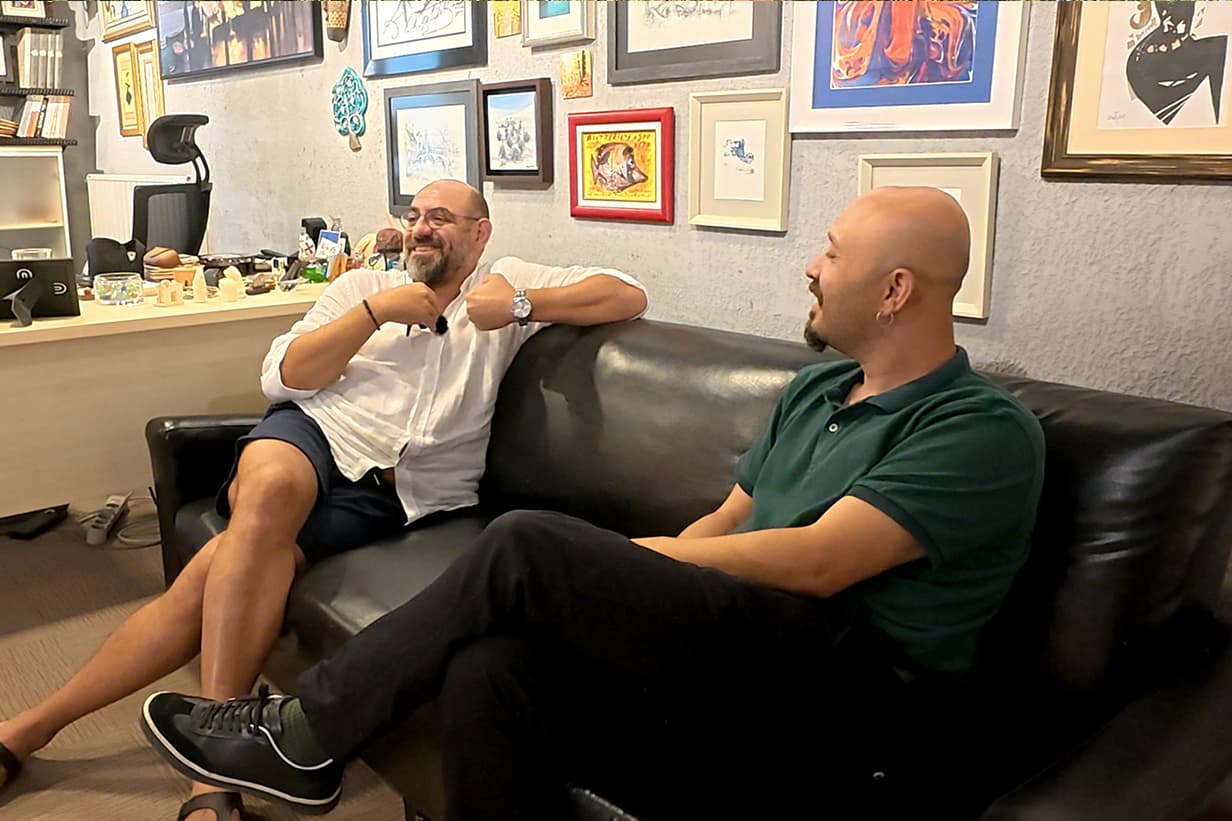
From Academia to the Design Studio: Dr. Murat Memlük and the MDesign Journey
Leaving academia behind to author a 15-year legacy in landscape design through MDesign, Dr. Murat Memlük’s inspiring interview is featured in peyzajMAG!

The Place of Landscape at the COP31 Table: From Belém Indicators to the Antalya Summit
In the lead-up to the COP31 Antalya Summit, peyzajMAG examines the Belém Indicators, the Rio Synergy, and the strategic imperative of landscape architecture in shaping climate-resilient cities.

"Why Is Our Wardrobe Never Full? The Ecological Footprint of Fast Fashion with Dr. Ceren Özcan"
Dr. Ceren Özcan, author of Zero-Waste Living writes for peyzajMAG about the consumer culture behind the "I have nothing to wear" dilemma and the hidden water and climate costs of fast fashion.
Hear about the next issue first
Leave your email and we will write when there is something new. We use it for nothing else.