The Place of Landscape at the COP31 Table: From Belém Indicators to the Antalya Summit
In the lead-up to the COP31 Antalya Summit, peyzajMAG examines the Belém Indicators, the Rio Synergy, and the strategic imperative of landscape architecture in shaping climate-resilient cities.
This story was originally published in Turkish. Read in Turkish
The world’s climate negotiators are gathering in Antalya from 9 to 20 November 2026. The headlines will be dominated by the fossil fuel timeline and money. But the real quiet revolution happened elsewhere: in Belém, adaptation became measurable. For the landscape-related professions, this means thirty years of “green space is good” rhetoric turning into numbers. And the summit’s host city is both the stage and the evidence of the debate.
For the participants who will spend two weeks in Antalya, Türkiye’s most intensive tourism region and also one of the places in the country to feel climate pressure earliest, the landscape before them looks set to be the physical embodiment of most of the issues to be debated in the sessions: a coastal plain descending from the foothills of the Taurus Mountains to the sea; citrus groves, greenhouses, hotels, asphalt, and heat.
The Mediterranean basin is warming roughly 20 percent faster than the global average. This is not textbook knowledge but reality on the ground: throughout 2024 and 2025, much of Western Anatolia experienced hydrological, agricultural, and ecological drought in succession, and rainfall fell to its lowest levels in half a century. Then, in the first months of 2026, Kumluca, Kaş, and Serik were flooded. The same region, the same year, both parched and under floodwater.
This is not a contradiction. It is two faces of a single sentence: the rainfall regime has changed, and the soil no longer holds water as it used to. Long dry spells harden the ground, and when the rain does come, it no longer falls gently but with great force. Heavy rain falling on ground whose absorption capacity has declined is a problem not of hydrology but of landscape, and its solution is also on the table at COP.
The city’s own heat balance is also part of the debate. Studies comparing Mediterranean cities show that, because of its urban sprawl typology, Antalya is more exposed to the heat island effect than Mersin. The reason is that an already hot city grows hotter still because of impervious surfaces and density. In choosing its host, COP31 unwittingly chose a site analysis as well.
First, the Table Itself
The text that sets the framework for these summits is the United Nations Framework Convention on Climate Change, which entered into force in 1994, abbreviated as UNFCCC. Its objective, in the Convention’s own words, is to stabilize greenhouse gas concentrations in the atmosphere at a level that allows ecosystems to adapt, ensures that food production is not threatened, and enables development to proceed in a sustainable manner. Ecosystems and food appear in the very first sentence. Thirty years ago, the Convention did not reduce climate problems to a matter of factory chimneys.
Today there are 198 parties: 197 countries and the European Union. Participation is nearly universal, but the picture is cracking. The US announced its decision to withdraw in January 2026 and gave formal notice in February, and the one-year period under Article 25 of the Convention is now running. The withdrawal will take effect on 27 February 2027, which means COP31 will be the last major meeting at which the US still sits as a party.
COP, meanwhile, is the Conference of the Parties, the body where these countries meet once a year to hold one another to account, negotiate, and make decisions. Decisions are taken by consensus, not by vote. A single country can block a text. For anyone who has wondered why COPs end in the early hours of the morning, this is the answer.
COP31’s governance will also be unusual. Türkiye and Australia are sharing the presidency under the Partnership Modalities agreement reached at COP30. Hosting, organization, political leadership, and the Action Agenda will be under Türkiye’s management. Minister of Environment, Urbanization and Climate Change Murat Kurum will serve as COP31 President. The negotiation process, draft texts, consultations, and actual authority in the negotiating room will rest with Australia, with Minister for Climate Change and Energy Chris Bowen serving as President of Negotiations. Australia will also host a Pre-COP with the Pacific countries.
What Happened in Belém
Now, to come to the part that really matters for the profession: last year in Belém, while the headlines were fixated on the fossil fuel language being dropped from the text, a threshold was quietly crossed at the adaptation table. Under the Global Goal on Adaptation, 59 indicators were adopted, the “Belém Indicators.” This number was whittled down from roughly 10,000 initial proposals. The indicators cover water, food, health, ecosystems, infrastructure, and livelihoods, and also include cross-cutting themes such as finance, technology, and capacity.
These are voluntary, non-punitive, country-driven indicators. In other words, no one is forcing anyone toward a number, but if something has an indicator, it gets reported; if it is reported, it gets budgeted; if it is budgeted, it becomes eligible for finance. For thirty years adaptation has remained in the shadow of mitigation, because mitigation had tones while adaptation had no figures. A megawatt-hour is easy to count. A patch of shade, a permeable surface, a renaturalized stream bed is hard to count.
Belém did not fully solve that difficulty, but it tackled it seriously for the first time. Nor is the process over: COP30 set up a two-track path called the “Belém–Addis vision.” One track will secure political endorsement of the indicators, and the other will refine them technically over two years. The destination will be COP32, which will convene in Ethiopia in 2027.
What this means for landscape is clear. The next two years are the years in which the definitions of the indicators under the “ecosystems” and “infrastructure” headings will be written. Will canopy cover be measured, or green space per capita, surface permeability, or ecological connectivity? The answer to this question will determine which landscape projects count as “climate projects” and find funding over the next decade. And that answer is being written right now, as we speak, in technical committees.
The COP31 Action Agenda
Türkiye’s COP31 Action Agenda has announced ten priority themes:
Zero Waste
Oceans and Seas
Food Security
Climate-Resilient Cities
Empowering Climate Action
Youth and Education
Green Industrialization
Clean Energy Transition
Rio Synergy
Resilient Health Systems
Landscape is not mentioned by name in this list. But indirectly, most of these themes fall within landscape’s field of work. Taking two of them:
Rio Synergy: Three conventions emerged from the 1992 Rio Summit: on climate, biodiversity, and desertification. For thirty years these three have proceeded in separate halls, on separate calendars, with separate bureaucracies. Yet on the ground, all three are three faces of the same piece of land. When you rehabilitate a stream catchment, you capture carbon, increase species diversity, and halt soil loss, thereby serving all three conventions at once. The Rio Synergy theme claims to close precisely this divide, and the scale at which this synthesis takes place is neither the molecule nor the planet; it is the scale of the land. In other words, the scale of landscape.
Climate-Resilient Cities: This theme is the most concrete claim Türkiye is bringing to the summit. The forum “Türkiye’s Road to COP31: Resilient Cities,” held in Hatay in May 2026 with ministerial-level participation from more than ten countries and the presence of institutions such as UN-Habitat, UNDP, and UNDRR, produced the Hatay Declaration. The Declaration committed participating countries to advancing climate-resilient urban transformation, scaling up blended finance instruments, accelerating the urban energy transition, and developing nature-based solutions. The text is being carried as an official document to the 13th World Urban Forum in Baku in May, and to COP31 in November. The Declaration’s own slogan is the diplomatic translation of what the profession has been saying for years: “From policy to practice, from recovery to transformation, from global commitments to local action.”
Mulch, Lawn, and the Problem of Scale
Antalya Metropolitan Municipality’s Xeriscape Project is an initiative running independently of the summit. Lawns are being removed and replaced with mulch, and water consumption is dropping significantly. It is a ready-made showcase for the participants arriving in the city in November.
Being a showcase is good. But for the profession, the real question begins after the showcase.
Xeriscaping, when applied incorrectly, can turn into a fashion item: the lawn is ripped out, gravel and a few succulents are put in its place, the irrigation bill falls, and the heat island stays the same, or even worsens, because an exposed gravel surface reflects heat back even more. Saving water and cooling do not always go in the same direction. A city that needs shade needs trees, and trees need water. The right answer is not “remove the lawn” but answering, at city scale, the question “which water goes where, for which function.”
This is exactly where it becomes clear why the Belém indicators matter. Without indicators, every well-intentioned intervention defines its own success.
With indicators, the question becomes not only how many liters were saved, but also how many degrees the temperature was lowered.
What to watch for in November?
For most observers, the summit’s overall report card will be read in two lines: will the fossil fuel timeline, which entered the text at COP28 and dropped out of it at COP30, return, and how much will climate finance and the Loss and Damage Fund grow? Both are important.
But for us there is an essential third line, in smaller print and more lasting: how will the technical track of the Belém Indicators define the “ecosystems” and “infrastructure” headings? Will the Resilient Cities agenda be able to turn the “nature-based solutions” pledge made in Hatay into something financeable? Will the Rio Synergy truly bring the three conventions down to the same piece of land, or will it remain just a panel title?
The answers to these questions will not be given in full in Antalya. COPs do not work that way; Belém’s real work was left to COP32, and Antalya’s will most likely be left to what comes after. But the direction in which the answer bends will become clear in November.
And there is a strange symmetry here. For two weeks, negotiators will sit and debate adaptation on a dry coastal plain, in a city whose heat island effect has been measured, in a region that has experienced both flood and drought in the same year. The landscape outside the hall will be both the justification and the test of everything discussed inside.
read on
Related stories

"Why Is Our Wardrobe Never Full? The Ecological Footprint of Fast Fashion with Dr. Ceren Özcan"
Dr. Ceren Özcan, author of Zero-Waste Living writes for peyzajMAG about the consumer culture behind the "I have nothing to wear" dilemma and the hidden water and climate costs of fast fashion.
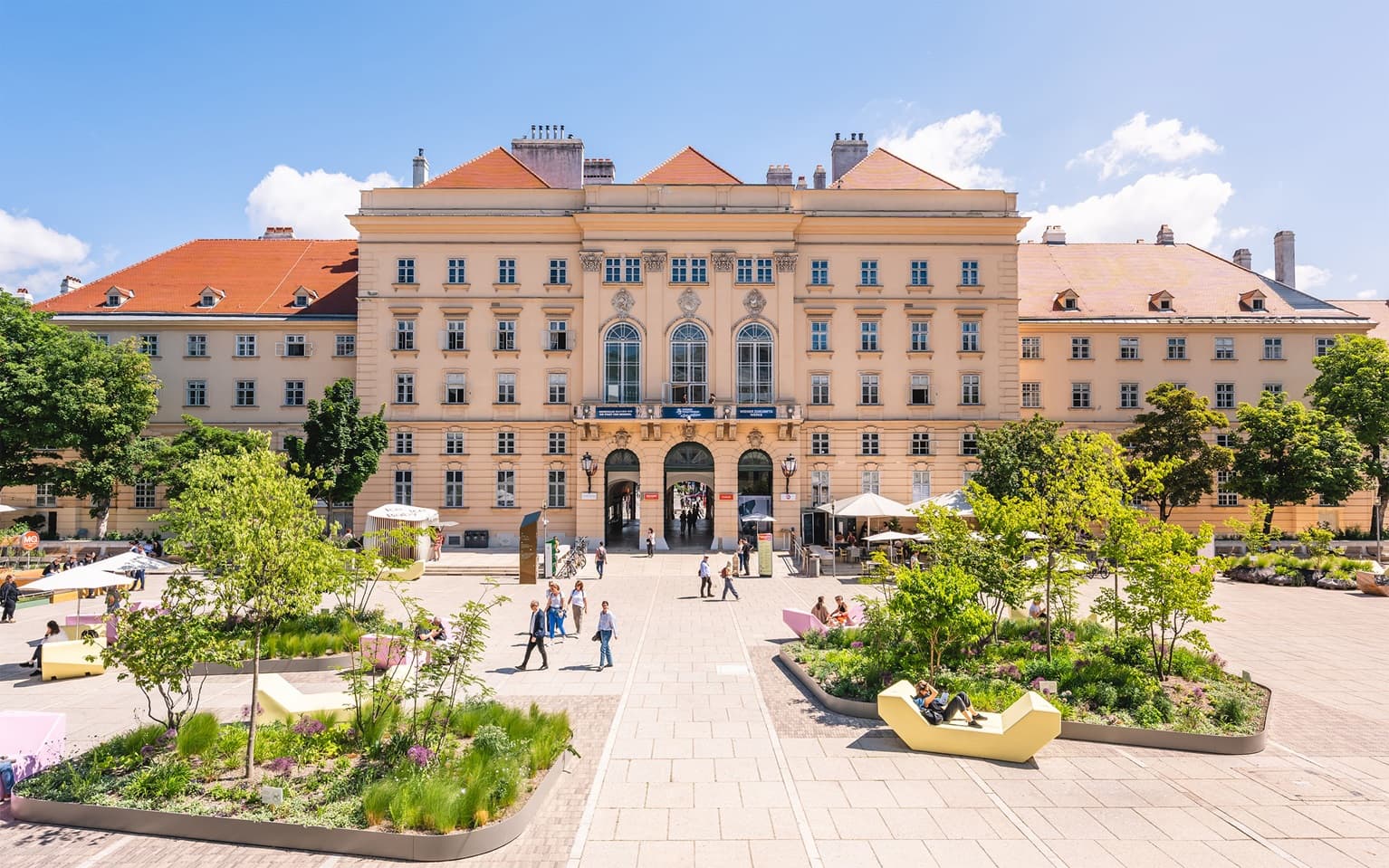
The Transformation That Tore Up Concrete in Vienna: Museumsquartier Goes Green
We met on-site with Museumsquartier Director Bettina Leidl to discuss the MQ Goes Green project, green transformation data, and visitor experiences.
From Organization to Communication: An Interview with President Özay Yerlikaya
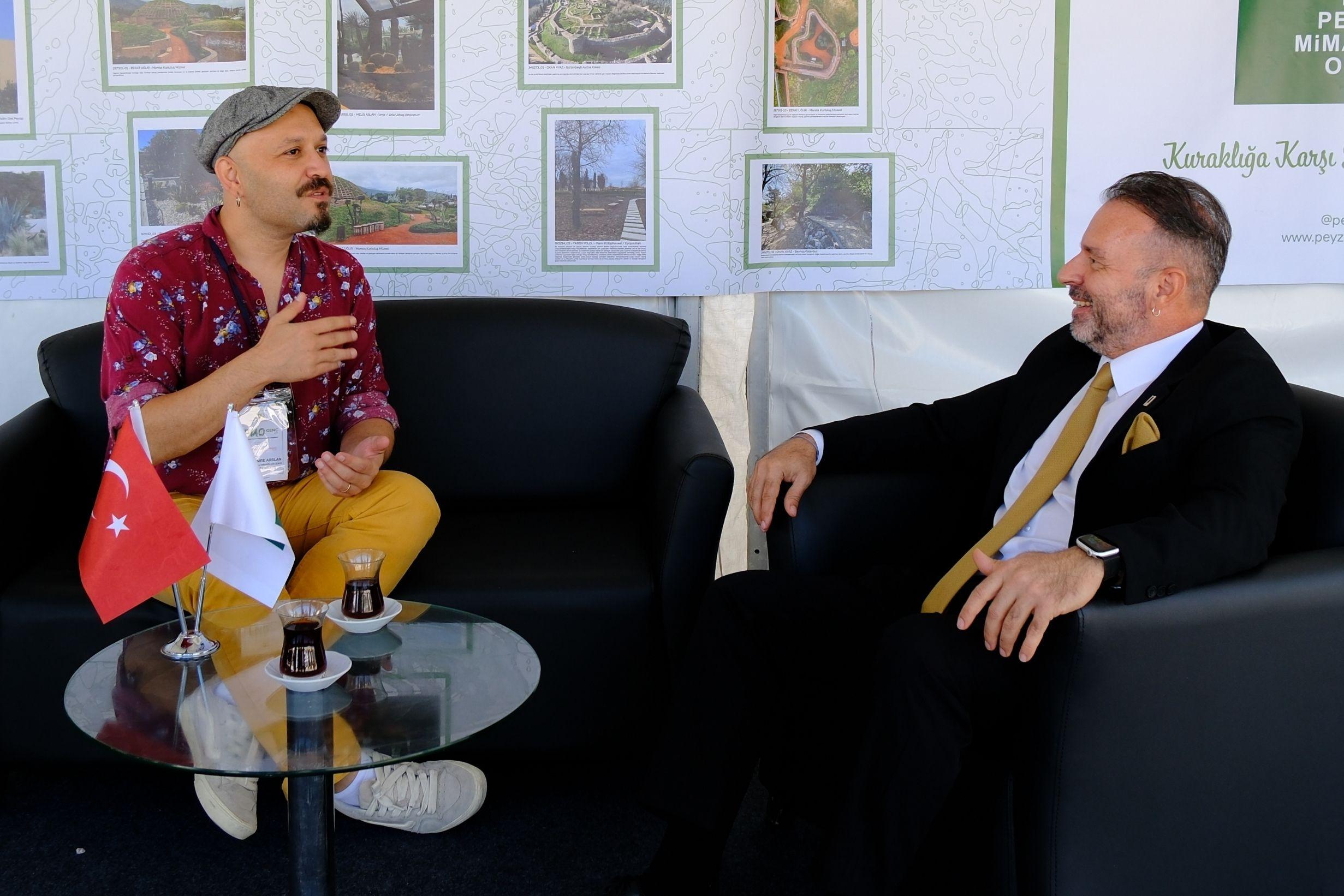
We spoke with Özay Yerlikaya, President of the UCTEA Chamber of Landscape Architects, about the profession's organizational culture, communication strategy, and struggle for rights.
Hear about the next issue first
Leave your email and we will write when there is something new. We use it for nothing else.